
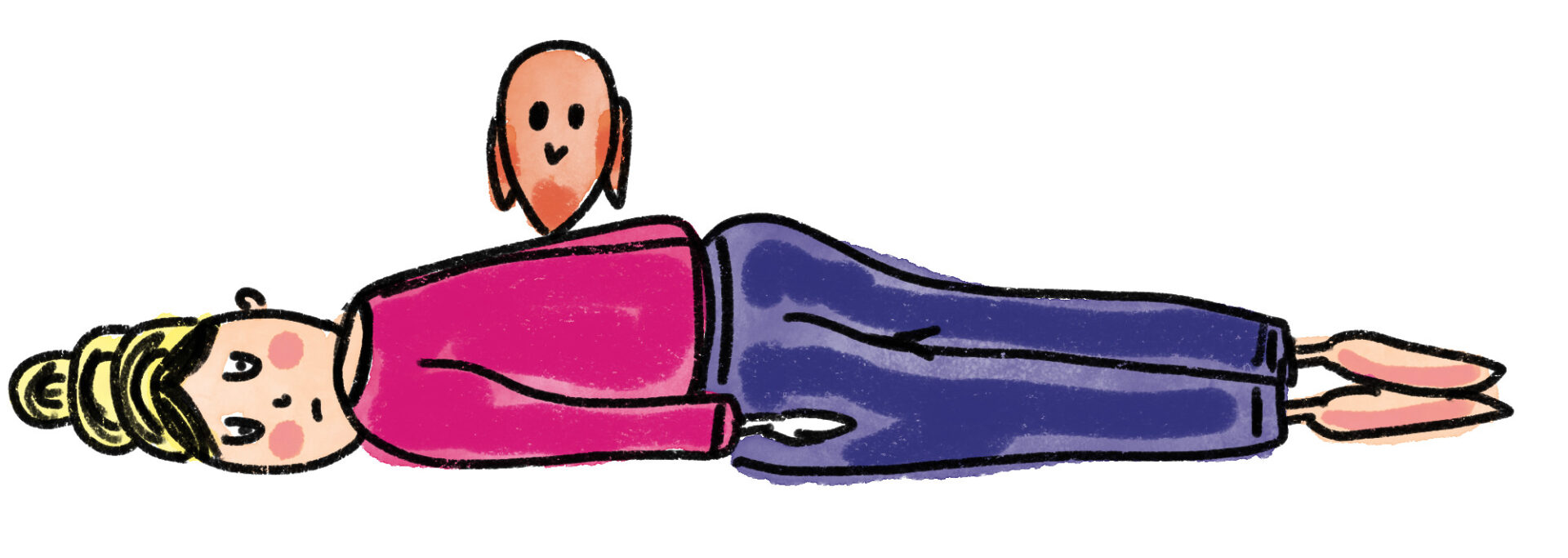
I’m flat and foggy and devoid of inspiration. I hear my friend Tania’s voice inside my head. ‘What you need,’ she would tell me, ‘is a protocol. I have protocols that I follow when I’m tired. You need to turn your Expectation Dial way down. I would consider setting it to zero.’
Another voice enters the chat:
Problems of output are usually problems of input.
I think it was Austin Kleon who said that. I nod at the wisdom of it, then answer back, even though he cannot hear me.
I know what it is I need. Screens have been occupying too much of my time.
I need to move, I say. I need to get outside.
From a creative viewpoint, it’s easy to think of ‘input’ as artistic inspiration, a Pick’n’Mix version of Julia Cameron’s Artist’s Date.
When we feel flat or uninspired, we tend to diagnose ourselves as not reading enough, not learning enough, not exposing ourselves to the work, colours, and thoughts of others enough, which is lovely and necessary and right.
And while all of that may be true, the deeper lack is often not stimulation, but something much more simple and much more complicated at the same time; the capacity for presence. Our attention is regularly hijacked by urgency and opinion- by headlines, notifications, and the constant pull of what feels most pressing- but far less often encouraged to settle into the textures, rhythms, and details of the world we’re actually living in.
This has consequences for our creative life and our connection to our imagination (surprise!), but before we get to that, let’s talk about how it manifests in the very ordinary, very mundane aspects of our lives.
When our sensory systems are engaged in a broader way, we develop a more global context for our lived experience. This doesn’t mean that the urgent or important fade away, but we are better able to understand (we literally ‘have a better sense of’) events existing within a wider spectrum, allowing us to navigate our life and creative experience with more perspective.
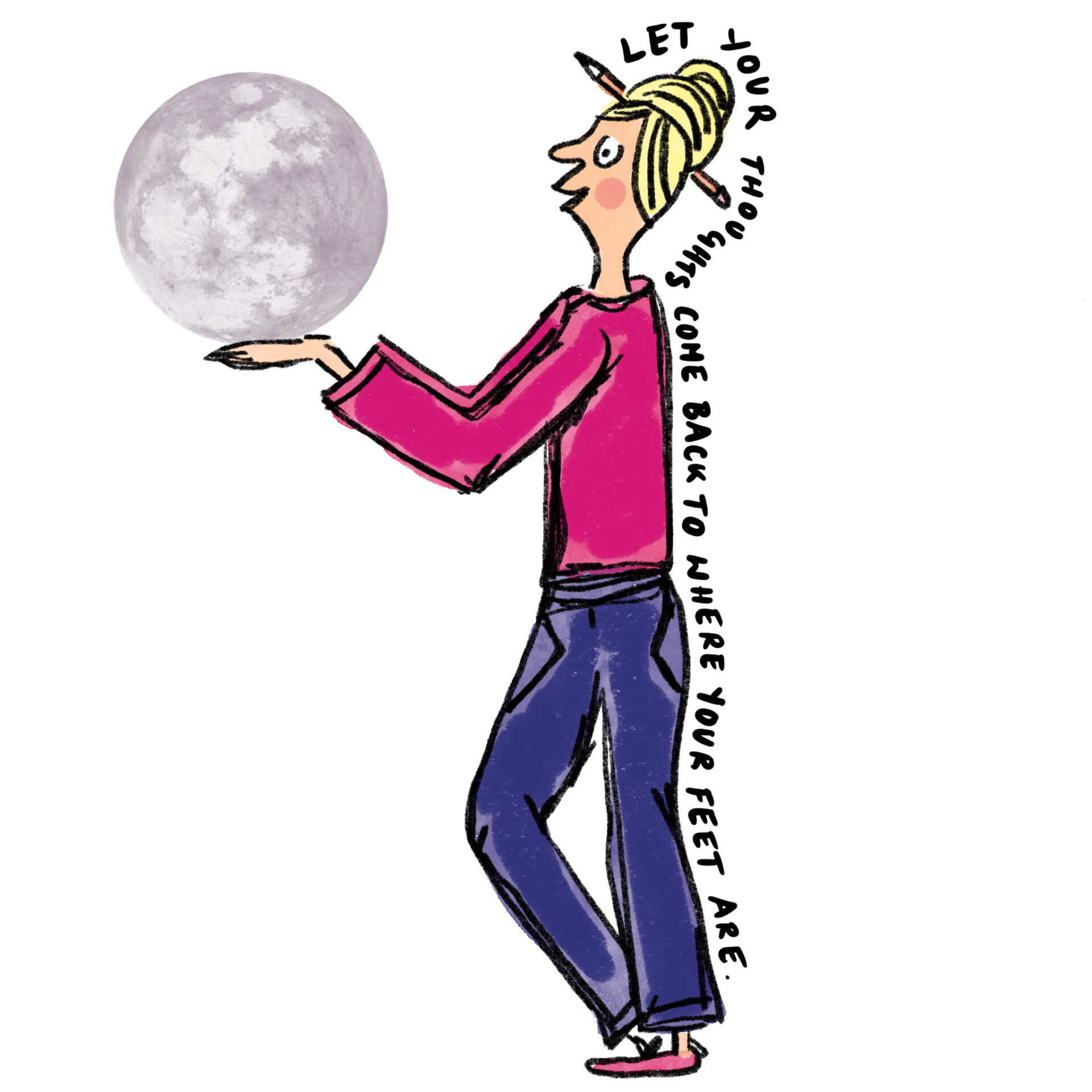
In this way, we begin to orient not just to threat or news-worthy information (and if this is the only thing we’re paying attention to, it can narrow our experience to despair and gloom) but to the reality of where we are right now, which is infinitely more nuanced and varied. Light, sound, temperature, movement, distance, and texture give the nervous system a continuous stream of contextual cues that allows us, as I recently heard my friend Kate say, to bring our thoughts back to where our feet are.
These sensory cues- an active body feeling its way through the world- are what the brain needs in order to understand its place within the environment it’s in. They are what allow our unconscious processes to place us into a fight flight response should that be relevant and necessary, but equally importantly, sensory input is what allows the brain to take us out of a fight flight response when that state of being is no longer required.
Sensory input is the be all and end all of a body that is adaptive and not stuck, the necessary input for our brains to answer the question, are we safe? And respond in a way that is appropriate.
And here’s the catch: our sensory capacity is compromised when we find ourselves operating in fight-or-flight. The reason for this is functional. In survival situations, it doesn’t make sense for our feeling selves to be fully online. If you’re injured or under threat, feeling everything is a distraction that reduce your chances of doing what you need to do to survive.
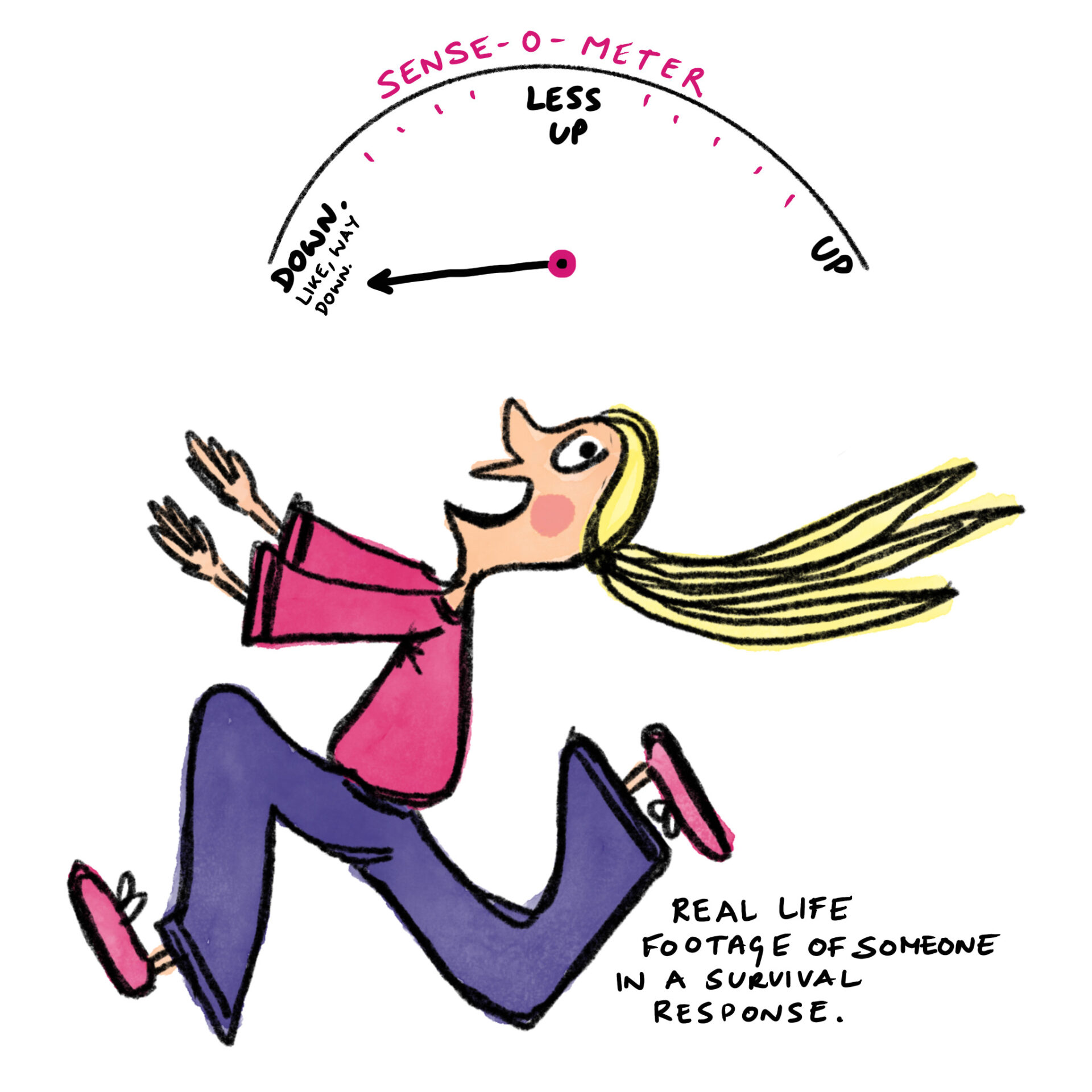
Consequently, in these moments, the nervous system turns the volume down on sensory input- sensory nerves effectively go offline- and they come back online once safety is perceived again. It’s an elegant system when you’re living in conditions your nervous system is designed for.
The difficulty that many of us now face is that this animal body of ours is living in circumstances it was never built to navigate. Our needs are now met without need for movement or sensory integration- we no longer need to hunt for food, build shelter, or tend to each other the way we once did- and the resulting lack of novel movement and sensory information means that we are no longer stimulated out of survival states when it is necessary and appropriate.
We have, essentially, comforted and convenienced ourselves into unwellness. And as a result, we find that we’re stuck in survival reflex experiences, looping round and round.
This is where the vicious cycle begins. If the brain relies on sensory input to accurately place itself in the world, and that input is reduced for long periods of time, what happens then?
Chronically operating from fight flight, or your sympathetic nervous system, not only changes how we create but changes our experience of the world.
Instead of our reality being shaped by our relationship to the world around us, we become trapped inside our own story. When our feeling selves are dialled down, the most real thing that we have to go on becomes our internal narrative. That inner world starts to act as the primary medium of perception, rather than the wider, living environment we’re actually in.
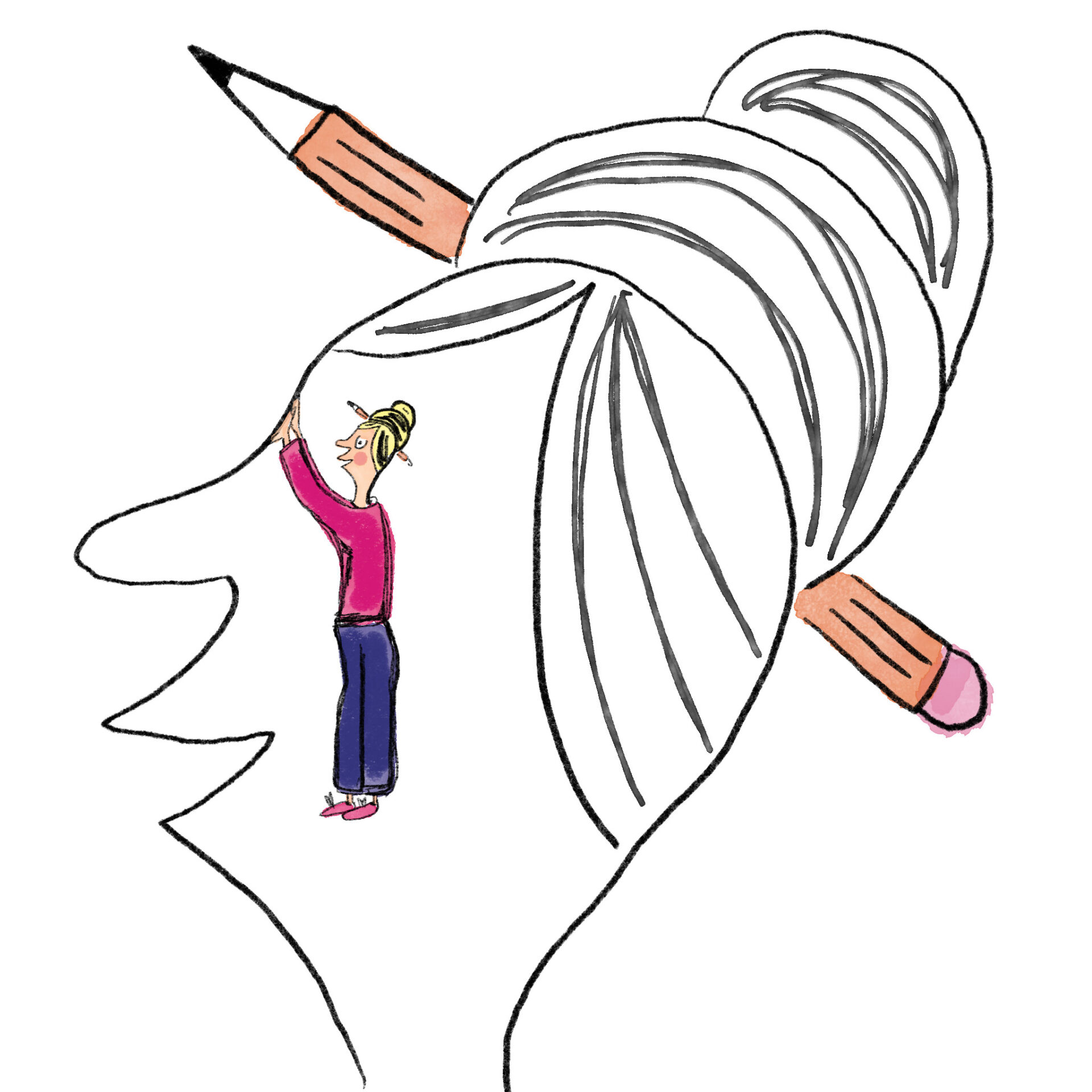
From a creative perspective, this also results in imagination existing separately to the ecosystem it’s a part of. We forget that imagination is an emergent process at the cross roads of sensing, moving, emotion and memory. We begin to think of ourselves as the generator of ideas, the start and end of the creative process, a state of being that is pressured and exhausting.
When our sensory world is narrow and urgency-driven, the body hovers in a state of vigilance. Attention is then pulled toward what demands a response, and very little else gets through.
In that state, it’s common to feel flat, foggy, or uninspired, and the truth of it is, you are. But the reason is not because you have lost your creative edge, or your imagination has dried up. It’s because your nervous system is too busy managing pressure to take in richer information, and your sensory and movement needs aren’t being met.
Imagination doesn’t go away but we can get ourselves to a place where it doesn’t have the conditions that it needs to emerge.
When attention widens to include the ordinary, physical world beyond the urgent, our nervous system opens up to new sensory experiences. We exist, again, in relationship. Our body becomes conversational, both with itself and the wider systems that it is a part of.
From here, curiosity becomes possible. Imagination has room to return, existing within a physiology that is open and responsive.
In this place, creative work stops feeling like something we have to force, and begins to arise more naturally from being in the world and sensing, rather than thinking, our way through.
Curiosity As A Signal Of Safety
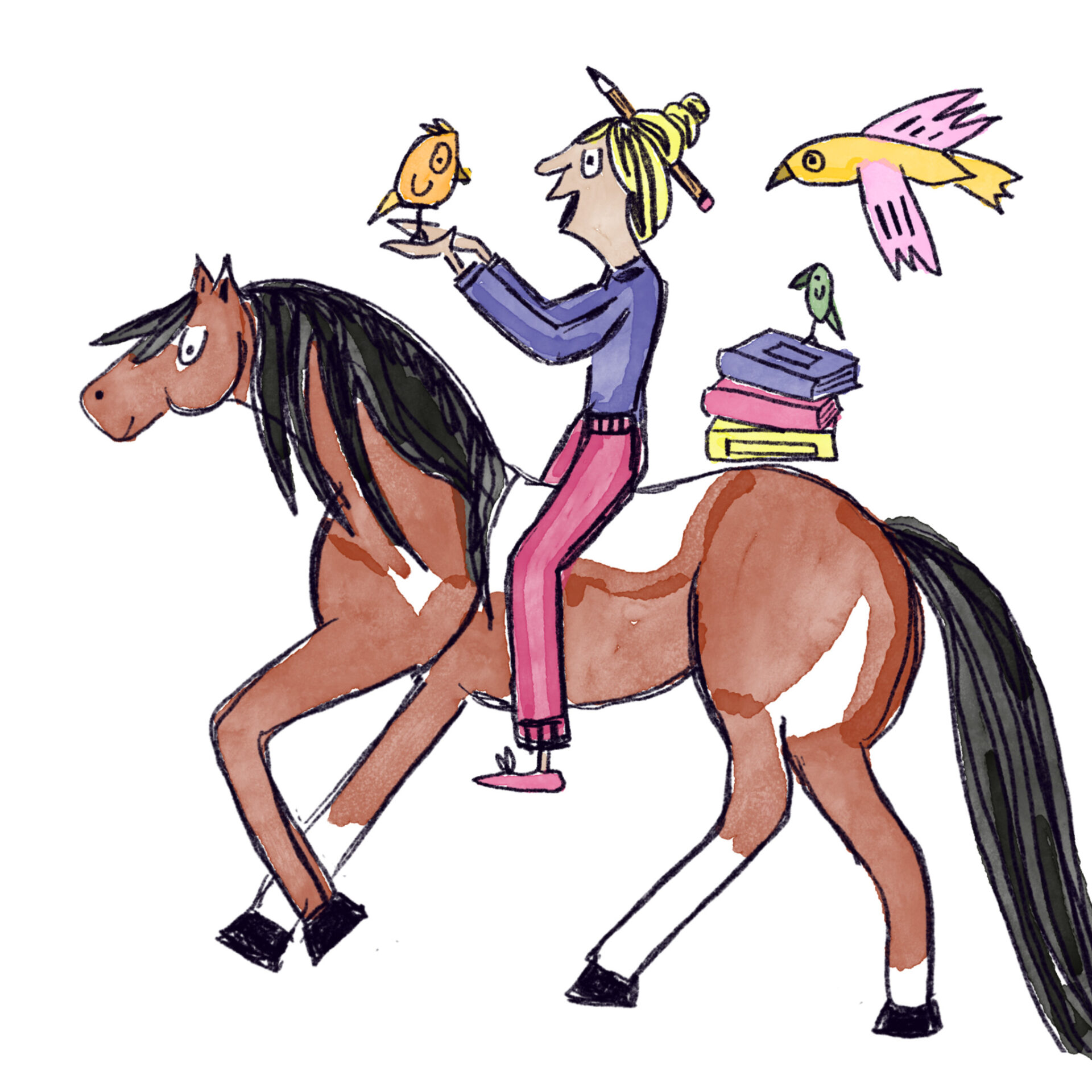
Curiosity sits right at the centre of the relationship between sensory–motor experience (our body in conversation with the world through sensing and movement), emotion, and imagination.
The experience of curiosity is a functional signal that these systems are working together, the good news being that the experience is bi-directional; while curiosity emerges, we experience more open awareness, and likewise, we can encourage this state of being by actively inviting curiosity.
When sensory information, movement, emotion, and memory are integrated, attention can orient toward novelty without immediately tipping into defence. Curiosity then becomes our internal communication system indicating that the nervous system has the capacity to explore and we are no longer operating from reactivity and reflex, or at the very least, are encouraging ourselves in that direction.
Curiosity opens the sensory–motor field by inviting us to move differently, notice more, and stay with our experience a little longer.
That expanded reality gives the imagination more to work with. As imagination widens what we perceive or sense is possible, curiosity is further supported.
Exploration then becomes self-reinforcing and self-supporting. Which is why I frequently reminding myself: when I’m out of ideas of feeling flat, the kind of input I’m likely to need is to get outside and move.
Brain Maps, Movement & Imagination
Our brains are constantly building maps of the world and of ourselves through repeated experiences of sensing, moving, and feeling. Our internal maps are how we relate ourselves to our environment, understand our place within it, and seek to navigate it as easefully as possible.
When our experiences are emotionally meaningful, these maps become more detailed, flexible, and interconnected (they can also become distorted depending on the type of emotional attention we pay them, but that’s a story for another day). Curiosity plays a crucial role here. It encourages variation in movement, sustained attention, and novel sensory input, all of which help refine and elaborate our maps.
When curiosity is offline, and our state of being is dominated by survival, our maps become outdated and distorted. Sensory information narrows, movement patterns reduce to reflex, and imaginative range contracts.
Supporting curiosity, then, isn’t just about feeling more creative. It’s about giving the brain the input it needs to keep our entire beings adaptive and online.
Why Movement & Sensing Matter When You Feel Flat
Novel movement and sensing are one of the most direct ways to interrupt this narrowing of our attentional field. They give the brain information about the place we currently find ourselves in and disrupt the brain’s tendency to predict and repeat what we already know.
When our movement becomes limited and habitual, our sensory system lacks stimulation and as a consequence, our imagination has very little new information to respond to. But when we introduce regular, novel movement — a way of moving that requires attention and cannot be done in an automated way- our entire system is prompted to return to the moment we find ourselves in.
Imagination then emerges as our perception widens.
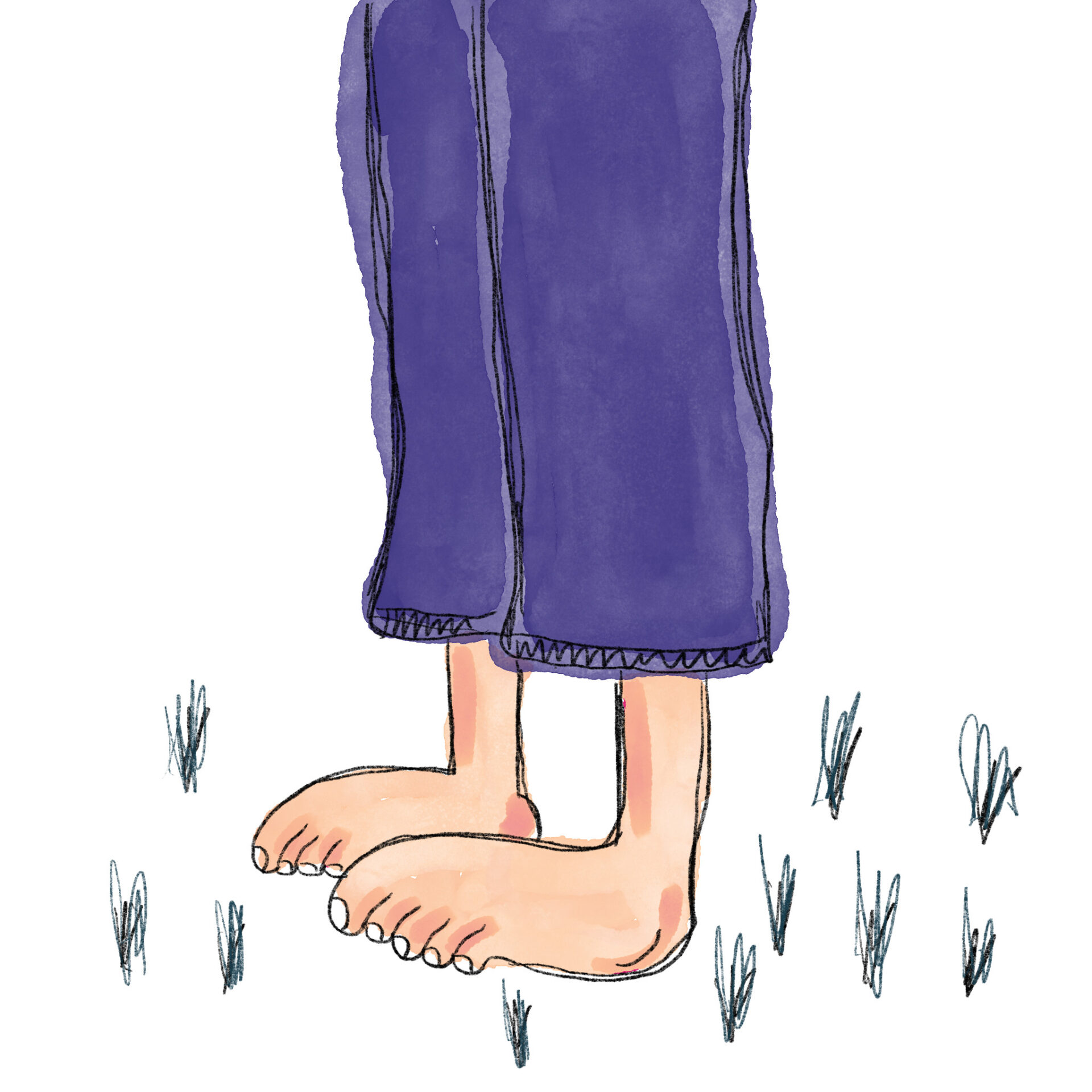
Importantly, this novelty doesn’t have to be dramatic. Walking barefoot or on uneven terrain is one example. Bringing your attention to changing pressure in as much as your body relates to the world around you.
Take a sensory snapshot in your mind’s eye of the parts of your foot in relationship to the ground.
Presence is organising.
Being present to your bones, your skin, your connection to what it is you are resting on, literally changes how your body arranges itself.
Next week, we’re going to continue the conversation by talking more directly about creative ways to bring your imagination online with consideration to your movement and sensing needs but in the meantime, if you have thoughts or questions, I’d love to hear them!
Leave ‘em below and I’ll report back.
Happy moving!
xx Jane