
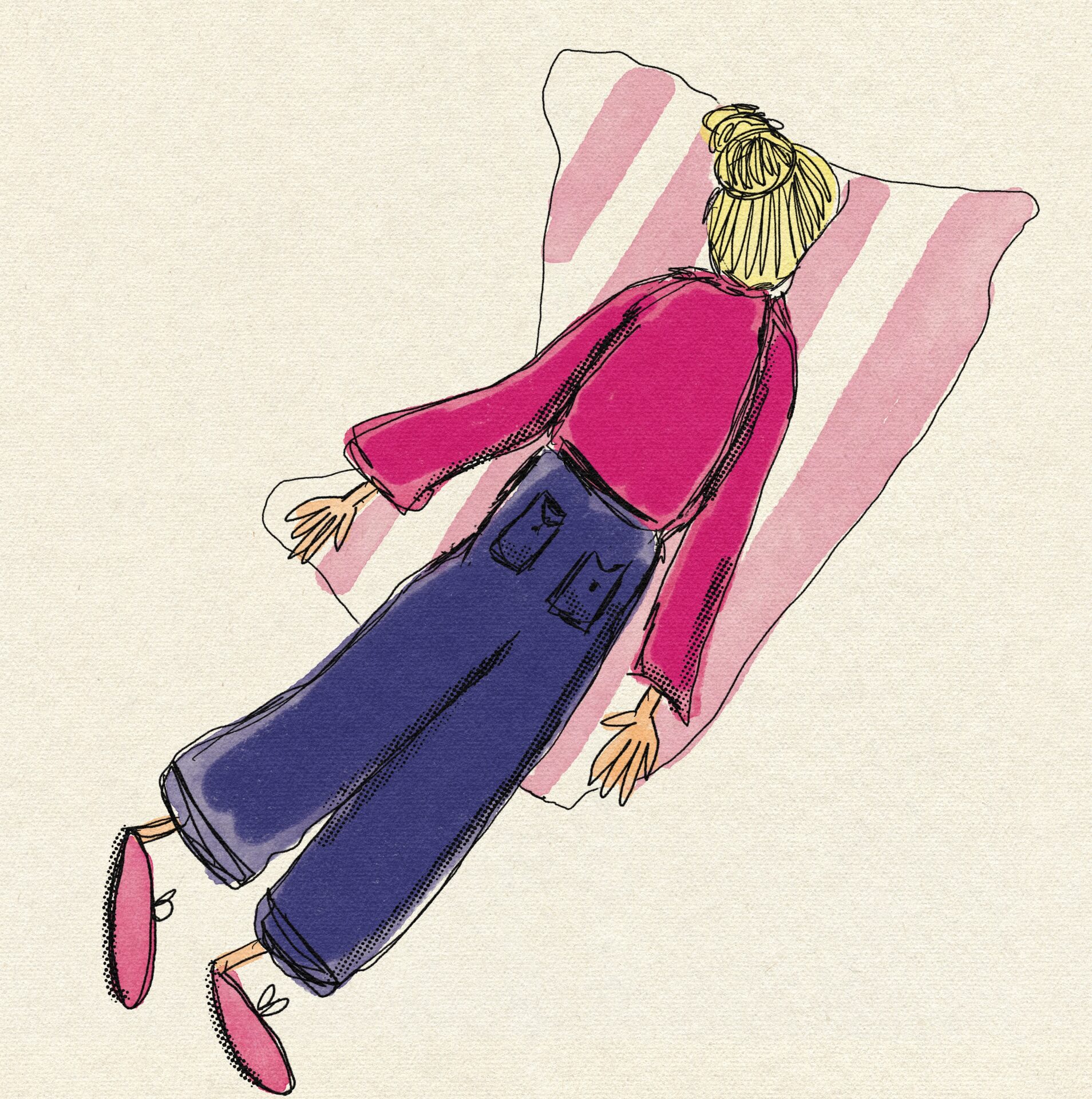
A week or so back, I pitched to my membership group an offer that I hoped would be appealing. If you’re feeling stuck or you’ve lost your creative mojo, I said, tell me what’s happening, and we’ll find a way forward together. I called them Creative Prescriptions; you answer a series of questions detailing the specifics and constraints, and I send you a short video back outlining some things that I think that might be helpful.
Tell me what’s in your creative heart! Give it to me straight!
I’ve made just over 30 Creative Prescriptions since then, and as you would expect I noticed patterns. Familiar themes that came up repeatedly. And the biggest creative kryptonite (perhaps no surprises here) was a lack of energy and tiredness. A proliferation of I’m just so flat, or I can’t seem to find the motivation, or I have no energy left to give.
The thing is, there’s tiredness and there’s tiredness. Not all tiredness-es are the same. There’s the tiredness that’s almost kind of pleasant. The result of a body well used, of a mind that’s been put through her paces, and where the answer is both welcome and obvious: a night of blissful sleep. A binary equation where I am tired = Sleep is the right and proper answer.
But for the second kind of tiredness; the tired-to-your-bone’s kind, where no matter how high you lift your feet, your toes are still there dragging, is quite a different beast. Because that kind of tired, somewhat confusingly, isn’t remedied by sleep. In fact, you could sleep for two years straight and find that you wake up in the same state that you started.
Call it burn out. Call it exhaustion. Call it whatever you like. It’s epidemic. And what you’re experiencing in this state is a body with completely frazzled edges; a nervous system in a state of collapse, where tiredness and lack of energy is a symptom, but rest is not the total answer.
So, what’s the deal here?
For anything I say to make sense, we need a basic understanding nervous system function. A quick rundown now:
When your nervous system is responsive and adaptive, your sensory system is feeding information to your brain all day long. There you are, going about your business, feeling your way through the world, and your brain is using that information to answer one foundational question your entire existence is based around:
Am I safe?
The answer arrives in three main forms:
Yes.
No.
Maybe.
Yes, you pass Go, collect two hundred dollars.
No or maybe and your brain and nervous system choose for you the reflex survival (or fight flight) response they consider most suited for the situation.
Under the umbrella of active fight flight states we have fight, flight and freeze.
We refer to them as ‘active’ because there’s a lot of available energy that we can draw on to heighten our powers of force and acceleration.
If the brain perceives that one of these defence mechanisms is not available to us, it takes us into the (rather depressingly titled) collapse or conservation of energy mode states. This is where you turn in on yourself. Your sensory dials get turned way down (remember this part). Your metabolic processes and general functions switch to idle.
If we were thinking about the brain giving the body an instruction at this point, it would be ‘don’t move and hold onto your resources’.
It’s basically your brain and body’s attempt to stick around on this earth as long as possible, believing your capacity to move or tend to your base survival needs are limited. So, you hang on to what you’ve got.
The thing is, in true survival situations, this process is both loving and benevolent. These animal bodies of ours are designed to live in a world that is movement oriented and sensually inspiring. Our survival nervous system is our bodies inbuilt protective system, designed first to mobilize for survival purposes, then (should that option not be available) to preserve our hearts and wellbeing by shutting down our senses to potential harm.
At this point, should neither of those options be available, it will lovingly hold our hands as we die and move on to whatever it is we go when we leave this earthly realm.
It’s an elegant and beautiful design.
The glitch in the matrix is not something we’ve had a software update for. Instead of this animal body being part of an animal world dedicated to mutual flourishing, we find the lives we are forced to lead out of sync with our base requirements. A dysfunctional, human-centred world that is resulting in dysfunctional minds and bodies.
Without venturing into the details, the end result is this:
Many of us are finding ourselves in a state of shut down or collapse that’s morphed into a dominant state of being.
And amongst many other things, it’s leaving us in a perpetual state of exhaustion that sleep alone doesn’t seem to fix.
Why doesn’t sleep or rest revive us?
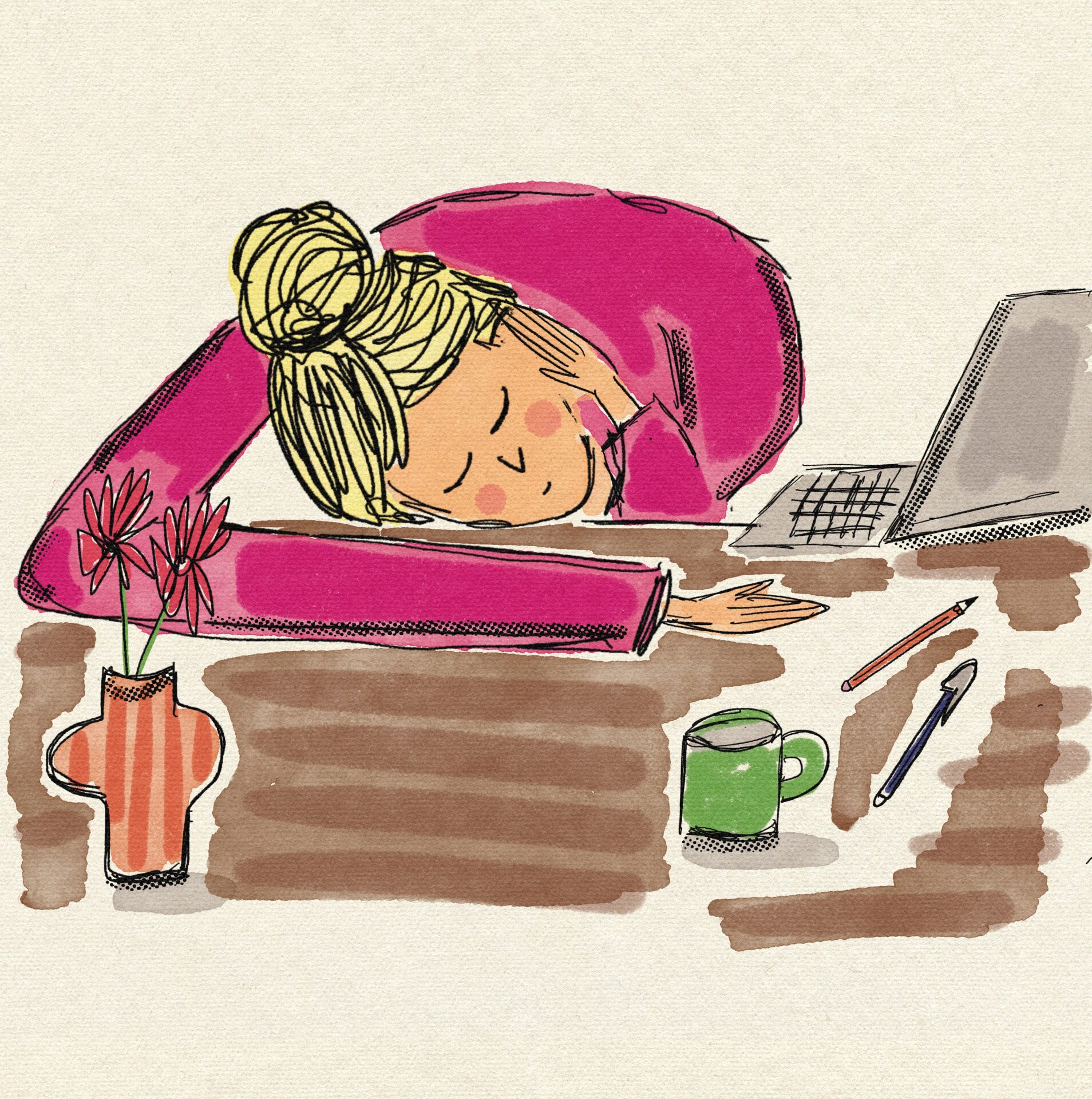
In collapse or conservation of energy mode, our internal processes are turned way down. Remember, everything the body does has functional purpose. The purpose of collapse or conservation of energy mode is exactly what it says on the box; to keep you around for as long as possible with the expectation of limited movement possibility and limited resources.
Whereas in more active fight flight states or the parasympathetic, our pumping, vibrational mechanisms are still high, in conservation of energy mode / collapse, they turn into marshmallows.
From here, we enter this highly ironic situation where we want to sleep all the time, but the sleep that we get is kind of shitty, the paradox being that your internal systems are functioning at such a low frequency, that your own brain will wake you up just to keep your system alive enough to function. A vicious cycle that keeps spinning round and round.
Ok, so what’s the answer?
Two main recaps:
- Sensory information is what the brain uses to understand its place within the world
- Sensory information gets turned way down as part of the sympathetic / fight flight response (and especially so in conservation of energy mode or collapse).
Which means if there’s one thing that becomes a priority, it’s bringing the sensory system back online.
The thing to remember is this:
If collapse has become your dominant state of being, it’s likely for one of the below reasons (there is a lot of nuances of course but for the sake of general discussion):
- That your body is truthfully reflecting an outer reality that needs to change before you can
- That you are stuck in a maladaptive cycle, where at some point, you went into collapse and didn’t have the necessary skills or means to get out of it.
Another thing:
It’s nuts (in my opinion) that we have to work so hard to keep ourselves functional and sane. The fact we even need to talk about ‘nervous system function’ and consider how to have healthy one is ludicrous. It’s shows what a mess we are all swimming in where being able to expect a healthy, vital body has become so effortful.
Frankly, I have many other things I would rather talk about than the nervous system. There are loads of other more fascinating things that my capture my attention. But to get to those- creating, making, the magic of this world around us– we need to be capable of taking it in. So here we are, figuring out this stuff out about our bodies.
Let’s keep going so we can move on to the good stuff.
Easing Your Way Out
One of the more difficult things about navigating your way out of collapse is that you’re often going to have to ignore what your own body is telling you. The action that you take is going to be very specific and but nonetheless, it is going to feel like it requires energy you don’t have available to spend. And in essence, you are right. This is the pickle.
Here are some of the essential principles for us to work to (bearing in mind I’m trying to keep this to essay length when the reality is this could be expanded to an entire thesis):
Movement

Your body needs to move, but only in ways that are functional and gentle (otherwise you’re going to drive yourself deeper into the place you are wanting to emerge from).
Ask yourself (reducing yourself to a brain, a body and a nervous system):
How would a body move if it were taking care of its basic needs?
It would move in the world outside and it most likely walk a lot. It would climb hills occasionally and find itself moving all over different surfaces. It would bend to pick things up. It would seek and gather.
So much of our modern movement is decided by the mind and not the body. We workout to look a certain way, to stay a certain size, to burn a specific number of calories.
Forget that. Think of movement for wellness and joy.
How would a healthy, sensing body want to move?
Now commit to some version of that, as regularly as you can.
Activate Your Sensory System
We think of the senses as the usual five senses, but there are actually nineteen scientifically proven senses that the body integrates to keep your sensory self-online. When we are reawakening the sensory system, the mechanoreceptors are some of the first to flash to back on green. They are the ones responsible for our sense of touch, pressure, and the relationship of our body to the world is it directly a part of via those parameters.
The wonder combination to consider is novel movement (and novelty is anything that requires your focus and awareness) in combination with sensory stimulation of some kind.
This means, if I walk but place my attention to how my feet are landing on the ground, and the changes pressure relationships, I can take something ‘regular’ (like walking) and turn it into something that is both novel and enlivening to the sensory system.
A good practice is to stay with a point of focus for a week or so, and to always think of what you are considering in relationship to something else. I call this a two-point practice: focus on something on the body, and outside the body, and consider them in relationship to each other.
Walk and focus on how your feet make that happen- where and how they land and what that feels like- for a minute or so at a time. Do this for a handful of times a day, for a week or so then switch your focus to a different part of the body.
Activate Your Creative Desires
So much of the reason that we found ourselves in this collapse place is due to abdication of personal, creative desire; our creative selves have been trampled over in deference for what we feel like we should be doing or have to be doing to be active, useful humans in the world- but it’s not without consequences.
These days, I have a robust creative practice. I write and draw daily, and if that doesn’t happen, I really feel it. If my creative energy is not used, it comes at me sideways; I am grumpy, depressed, feel flat. I am unpleasant.
I think of all the years I didn’t tend to my creative wellbeing and the cost of that. All that energy rampaging round my insides without useful or imaginative direction.
I am not isolated in this- I believe this is true for everyone- I just happened to find myself in a place where the work I did remedied by insides (which, believe me were really kinda shaky) to be point where I fell in love with my creative self.
Let yourself feel your own curiosity and learn to trust her. Not as something nice to do but as something essential and important for your wellbeing.
Your Prescription
I know, it really is a kicker and I know that it’s unfair. This IS going to take energy that you feel like you don’t have, so micro-dose things at the start. The awareness of what’s happening is essential.
Write a prescription for yourself (or I will do it for you!) and follow your own instructions. Take the decision making out of it and understand, if you identify with anything that I’ve said above, what is required for your own wellness.
I don’t have a better word for it yet (I’m working on it) but some form of accountability is good. I noticed with the prescription that asking people to check in with me in the group with their creative practice has been helpful.
We need to surround ourselves with people where the thing we want to do (Make art! Write the book! Tinker with pencils! Doodle!) is not only normal but supported and encouraged. I have my membership community and the door is absolutely open to you, but wherever and however it suits, make it your mission to find your people.
If (when!) you have a day where it all falls apart, it’s completely fine. Just pick up the thread as soon as you can. This is not a one-shot wonder; this is your life, and you aren’t something to be fixed. Let’s embrace what we’ve got and revel in as much of the good stuff as we can.
If you have questions, leave them for me below. Happy to chatter if it’s helpful.
Much love to your gentle selves,
xx Jane
3 thoughts on “What If Your Kind Of Tired Isn’t Fixed By Sleep?”
Oh my gosh Jane, The timing of your “essays” that pique my interest, that I actually stop and read fully, is always on point for what is rattling around in my head at the time.
I feel that you wrote this “essay” just for me. Thank you.
I am going to write myself a prescription because externally offered ones don’t land.
I started learning to paint with watercolours at Christmastime and have not picked it up since. I will include this in my prescription.
I have been craving my horse time which I have put aside for too long. Walking with my horse, taking him for a pick, grooming with intention, picking my liberty back up are going to appear in my prescription starting very small.
I feel a little bubble of hope deep down starting to shift.
I keep putting off movement as I need to work and cannot afford to feel any worse than I do but your explanation has shifted something for me. Thank you.
I am currently listening to “Accessing the Healing Power of the Vagas Nerve” by Stanley Rosenberg.
I am forever grateful for your generosity of spirit, sharing of your wisdom and for being a bloody top sheila.
Much love.
Linda X
Linda, I’m so glad that it was helpful Your top shelia comment made me laugh- definitely the most highest of compliments
I love your prescription also, thank you for sharing with us. Let me know if there’s anything I can do to help.
xx Jane
I’m pleased you appreciated my compliment. ❤️