
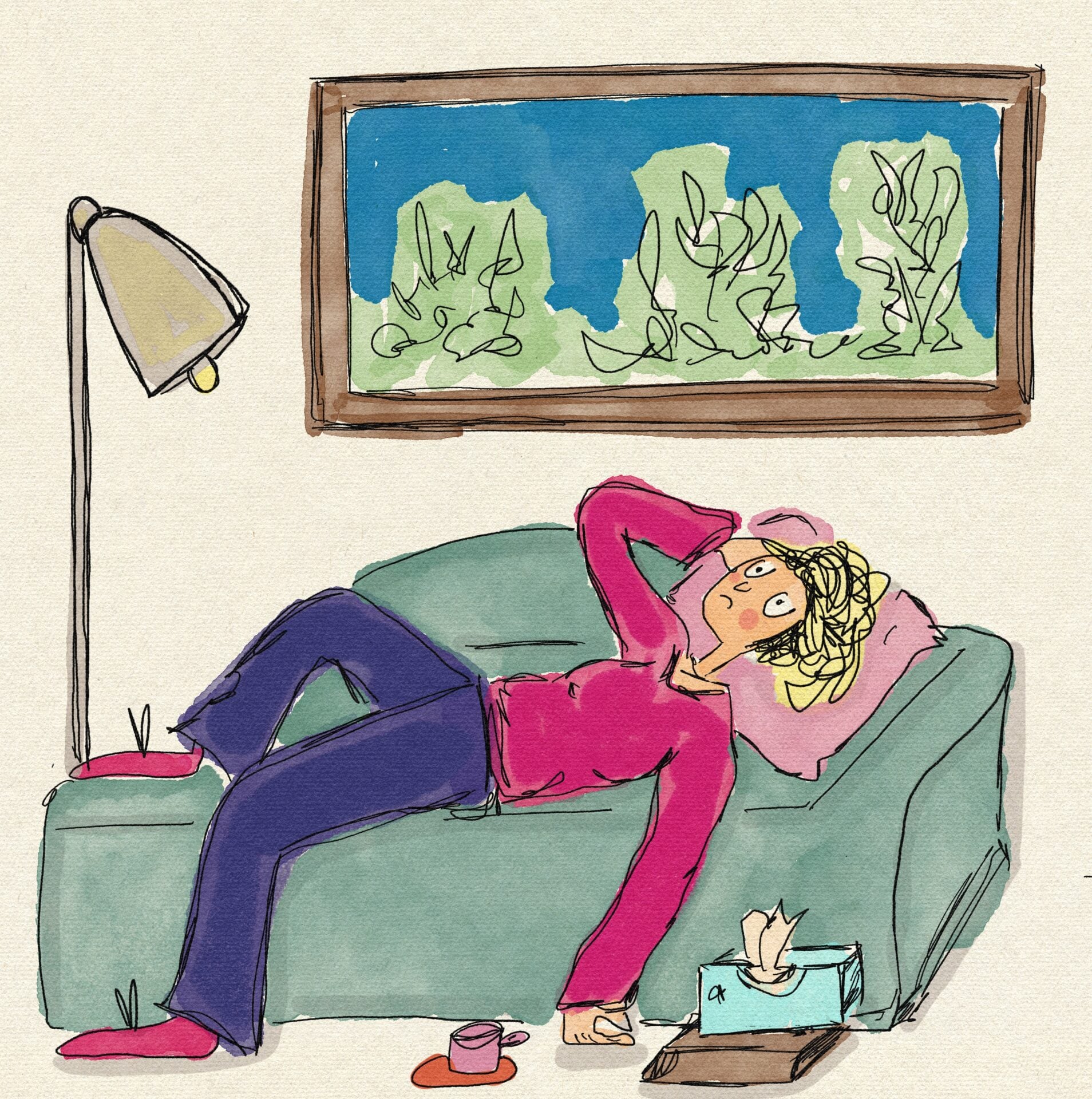
There’s a thing in our house we refer to as ‘Contractor’s Flu’. Back when my husband was a documentary-maker-person, he would have back-to-back contracts for the twelve months up ‘til Christmas, and then for the two week’s he had off, he’d get the flu. As predictable as clockwork.
A similar thing happens to many students; over the course of a semester or term, internal forces are rallied. You do the work, submit the assignments, possibly party on the weekends, your internal dials set to go, go, go until you slam up against the holidays and find there’s nothing left to draw on any longer.
I mentioned in my post last week that I was making some Creative Prescriptions for willing members of my group, and when outlining the situation for me, one of them suggested they enter a competition for their writing. They wanted to use the deadline as a driver, a reason to push themselves but the push was the self-flagellating kind.
Call me crazy, but I’m rather attached to keeping suffering separate from the creative process. It’s an overdone trope that I’m keen to leave behind.
And in the same breath, I understand how we’ve got ourselves into this weird perspective pickle. And that if we do want to create from a place that is sustainably joyful, we might need to figure out how to extricate ourselves from this pattern of making, creating and working that lurches between acceleration and hard braking.
Where we begin to crave a less adrenalised ‘creative maintenance energy’ as the truly desirous energy kind.
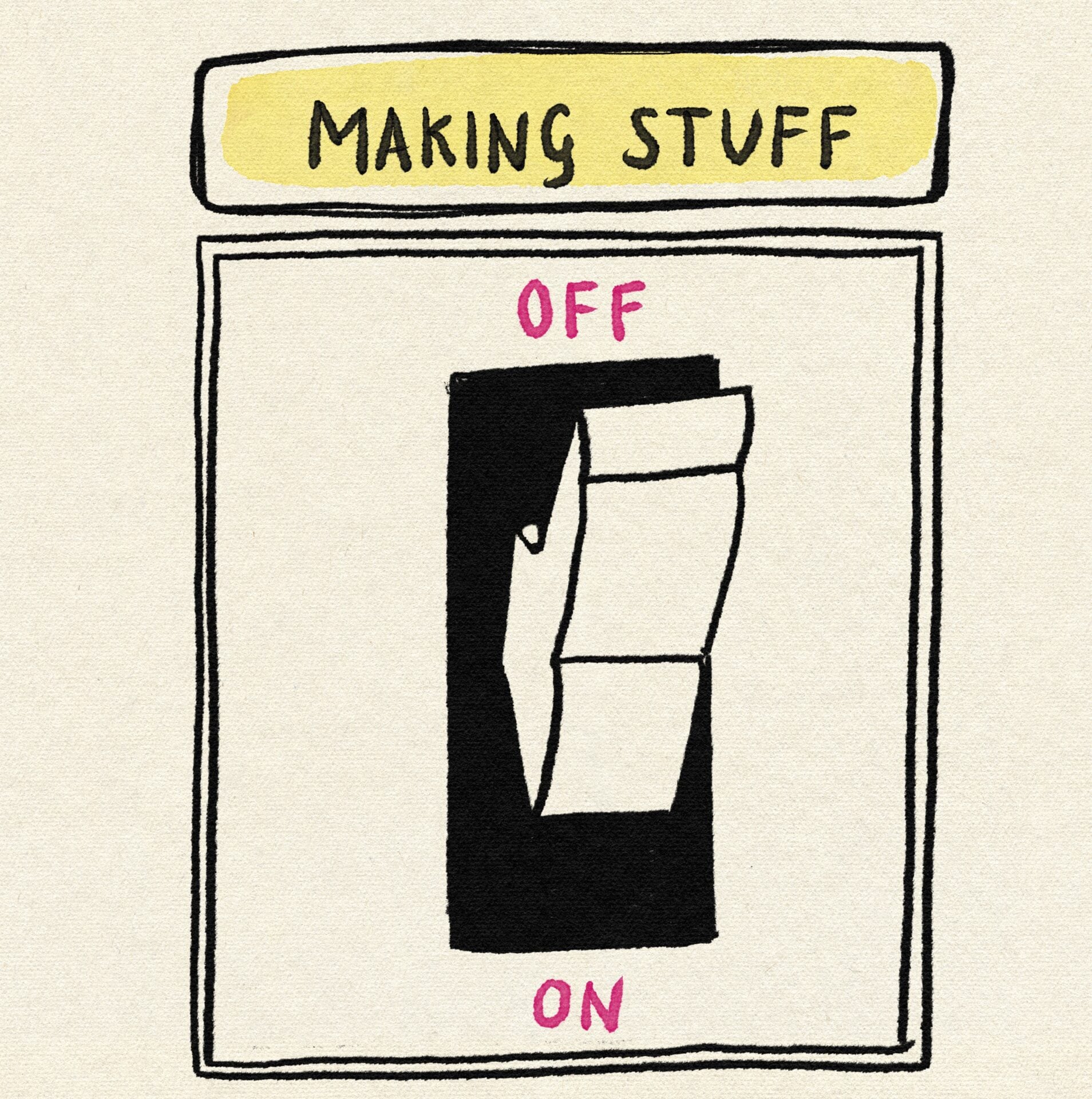
So, what’s the deal with the go, go, go… and then boom, collapse?
At this point, I’m going to do something a bit annoying and link you to another thing I wrote. It goes into the nervous system mechanics in more detail, and also saves me repeating myself, which you’ll find boring. You can find that article here.
In a nutshell:
When we refer to the sympathetic nervous system (conversationally known as fight flight) or the parasympathetic nervous system (the place we operate from when we are creative, conversational and relational) we are talking about systems of movement.
Everything that we do—literally everything—is rooted in one of these two systems. This background understanding is important for what I’m going to attempt to explain right now.
So, play with me for just a moment…
Let’s move forward with the understanding that you put your attention on many different things over the course of your day. And the kind of attention you pay to each of those things is also different, depending on the context.
For instance, how you attend to something related to work will typically be given a different type of focus and attention from something that you feel more curious and playful around, that you consider to be a hobby.
These differences aren’t inherent, but that’s typically what we find.
Our learning styles are much the same. How we’re encouraged to learn, our particular type of brain and nervous system, the environment that we learned in, the person that we learned from all shape our learning experience. And depending on what we’re dominantly exposed to, we develop learning and working behaviours that correlate with those conditions and habits.
Learning and creative habits that are rooted in the fight flight nervous system usually form when early conditions were built around rote learning and repetition — where there was only one acceptable pathway that led to a single, expected outcome. In those environments, the body learns that action is something to “get right,” not something to explore.
Conversely, the creative nervous system develops through play-based learning. That doesn’t mean there was no outcome or intention, but the route to get there remained open. You might have had a starting point and a desired end point, but your brain and body were free to figure out how they wanted to organise themselves along the way.
What does this mean in practice?

Let’s use the student as a working example. Say your learning style is rooted in the flight fight nervous system. You approach a project as though your predator and prey. You focus in on what needs to get done. Your awareness is channeled predominantly towards the object of your attention.
As we move into the fight flight system, our sensory focus narrows. We block out all extraneous information the brains deem superfluous to our mission so we can follow the mechanisms of survival.
Fuelled by a cocktail of fight flight hormones, the body rallies. You become sharper in all ways that correlate with that need; intensely focused on the task at hand, channeling all your resources towards the desired outcome- and all other systems that in this context are considered secondary- digestion, sleep, hormone balance for example- get turned off or down.
The survival nervous system is a system of compromise. The working deal is that your overall wellbeing is negotiated for the greater aim of survival. For short bursts, this is a contract we’ll gladly shake hands on. But when it becomes our dominant way of living, learning and creating, then sooner or later we find our energy has a shelf life. And before we know it, the pendulum has swung over to exhaustion, depletion and collapse.
Put simply: It’s not a way of creating, making or being that is sustaining.
We are taut elastic bands that, under tension, can only hold their shape for so long before they become limp and floppy. Our bodies are really much the same.
Parsing Apart Creative Energy from Adrenalin
A fascination that I discovered early on when working with movement-related-nervous-system stuff, is that when someone shifted out of fight flight and into a more sustainable mode, they described their experience as ‘sleepy’. I heard this repeatedly:
I’m tired, I’m drowsy, I feel kind of foggy headed.
At first, I wondered if they were just really tired but then it became something more. I realized that when a state of fight flight living has become normalized, anything separate to that feels flat, inert, and kind of wrong.
So much so, that the closest association we have with that state of being is often sleep.
I’ve been fortunate to have people stick with me long enough to emerge the other side. Where the ‘un-adrenalised’ state of being is no longer novel.
Where the brain and nervous system start to respond and experience in ways that are associated to sustainability and longevity, not just survival.
But it’s almost like a detox. A willingness to inhabit a different state of being long enough to wind down. And a belief that you won’t lose the parts of yourself that you want to hang onto in the process.
That you’ll still be ‘yourself’ when you come out the other side.
How does this relate to our creating?
In all the many ways. If we approach creative projects from a place of fight flight, then it’s likely that this swing between acceleration and collapse will be familiar.
You’ll tend to find it easier to make and create when there’s a deadline, a fixed outcome or set of objectives for your work, and outside of that, day to day creating can feel absent, uninspiring or illusive.
It’s not that you can’t, don’t or won’t get things done, but there’s a cost. And one that increasingly shows itself over time to the point where (heaven help us) we wonder if we should pack in this whole creating thing altogether.
So, what’s the remedy?
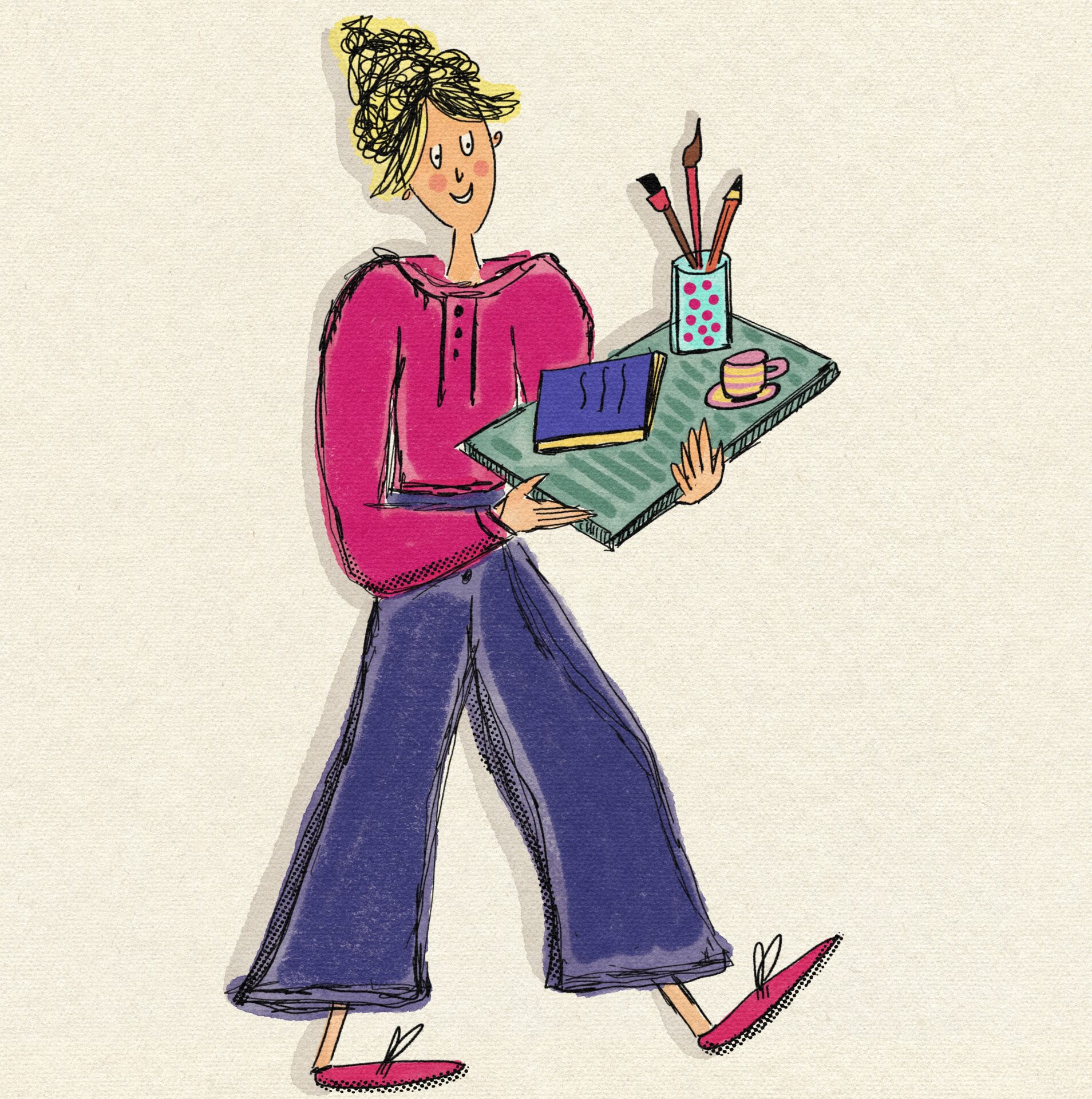
I don’t have a clear and finished answer. After all, the truth of each of our creative lives can’t be condensed and finished off in tidy loops.
It’s also dependent on whether we recognize this accelerator-brake lurch as our dominant way of living, or our dominant way of creating- they aren’t the same thing.
In the case of the former, we need to ease the system out of a place of chronic fight flight (a combination of sensory activation, novel movement, and perspective shifts that might currently support a way of being that’s reactive and unsustainable).
But if we were to consider this solely from the position of creating, I feel like the nudges can afford to be more subtle.
And I suspect a big part of that answer might be joy.
Along that line, I have a question for you:
What do you want to believe about your creative practice?
I’ll go first to get us started:
I want to believe that it’s a vehicle of expression.
I want to believe that it’s collaborative; that I’m in conversation with this vast creative force around me, and that if I just stay in that flow, creative experience is endlessly available to me.
I want to believe my creative self is someone who can be trusted. Whose thoughts I can listen to and act upon.
I want to believe I can create not from a place of urgency or a need to prove, but from a place where I’m in conversation with my insides, an alchemy of sorts, that I share with the wider world.
That it doesn’t have to be hard. That it can be light. That it can be simple.
That I can accept who it is I am and keep on going. That this will always and forevermore be the start point.
That creativity is not a breakthrough, but a series of ever-present openings.
And that as long as I stay faithful to the moment, creativity will always be faithful to me.
Creating from a place that is sustaining requires internal calibration.
…And even if we struggle to understand exactly what it is we are aligning or calibrating with, we can perhaps start to understand it better through what it’s not:
Creating is not urgent.
It’s not a test.
It will not ask you to sacrifice yourself to the process.
And it does not require that you suffer.
And if you believe contrary to the above, consider that what you’re holding onto, your ways of approach are something learned rather than inherent.
It’s a conversation with life moving through you, and life shows up in all manner of varied ways.
There is a tricky part…
Of course. (Re)committing to our creative practice first and foremost as an essential part of our wellness will inevitably make space for all these outdated thoughts and feelings to rise up to the surface. It can even poke and provoke them.
You’ll have to pace yourself, no doubt. To observe the gnarly, pesky thoughts but not invest in them. Perhaps this is the Zen part of creating. To grow your capacity to both hold and shed what’s no longer useful and continue to create along the way.
I have so much more to add to this- the logistics, the fine-tuning, the body bits, but this is where we’ll leave it for today.
It’s all practice, isn’t it? Creating from a different place of being. It seems to me like a worthy thing for us to commit to.
xx Jane
A thing that (might) be of interest to your fabulous self:
This weekend, I’m teaching a workshop where this whole conversation *points to the above* is going to be our focus. It’s going to more practical than theoretical. I’m continually ask myself as I put the bits and pieces together, how does this apply? How is this useful?
If this is interesting to you and you’d like to adventure with me as we explore it together, come join us. You can learn more about it here in Creating Wild.