Three Creative Experiments For Anxious Days


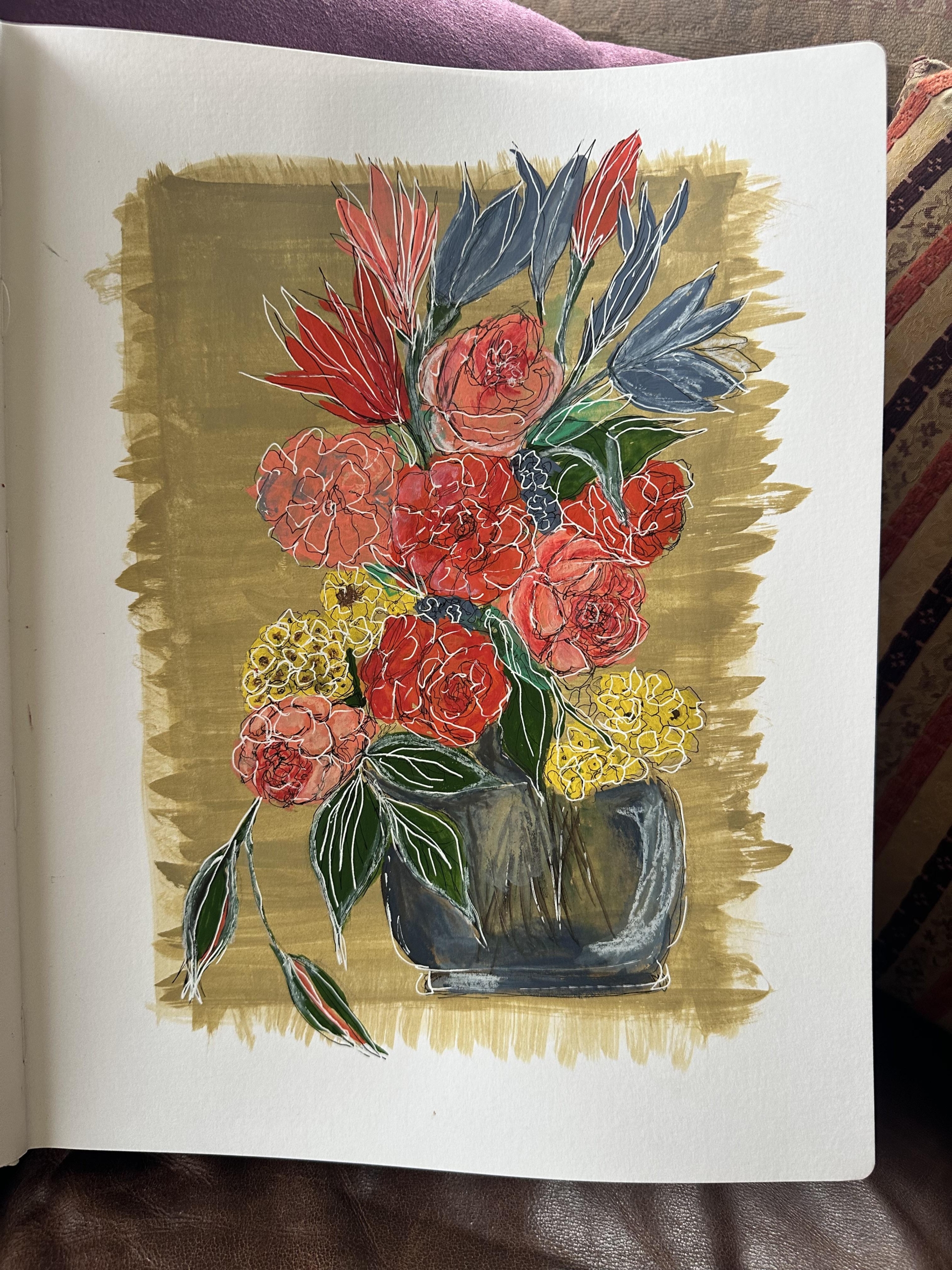
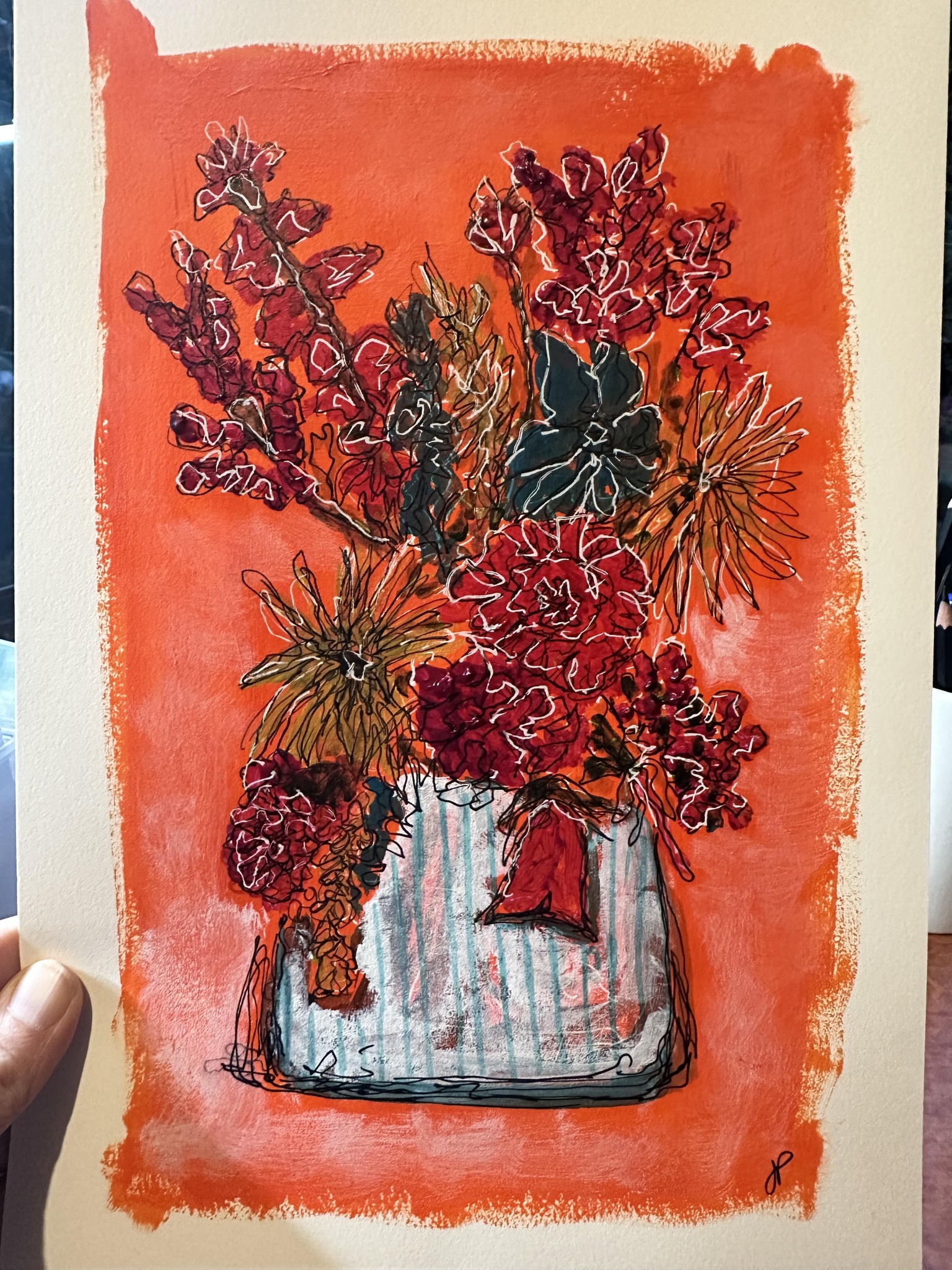
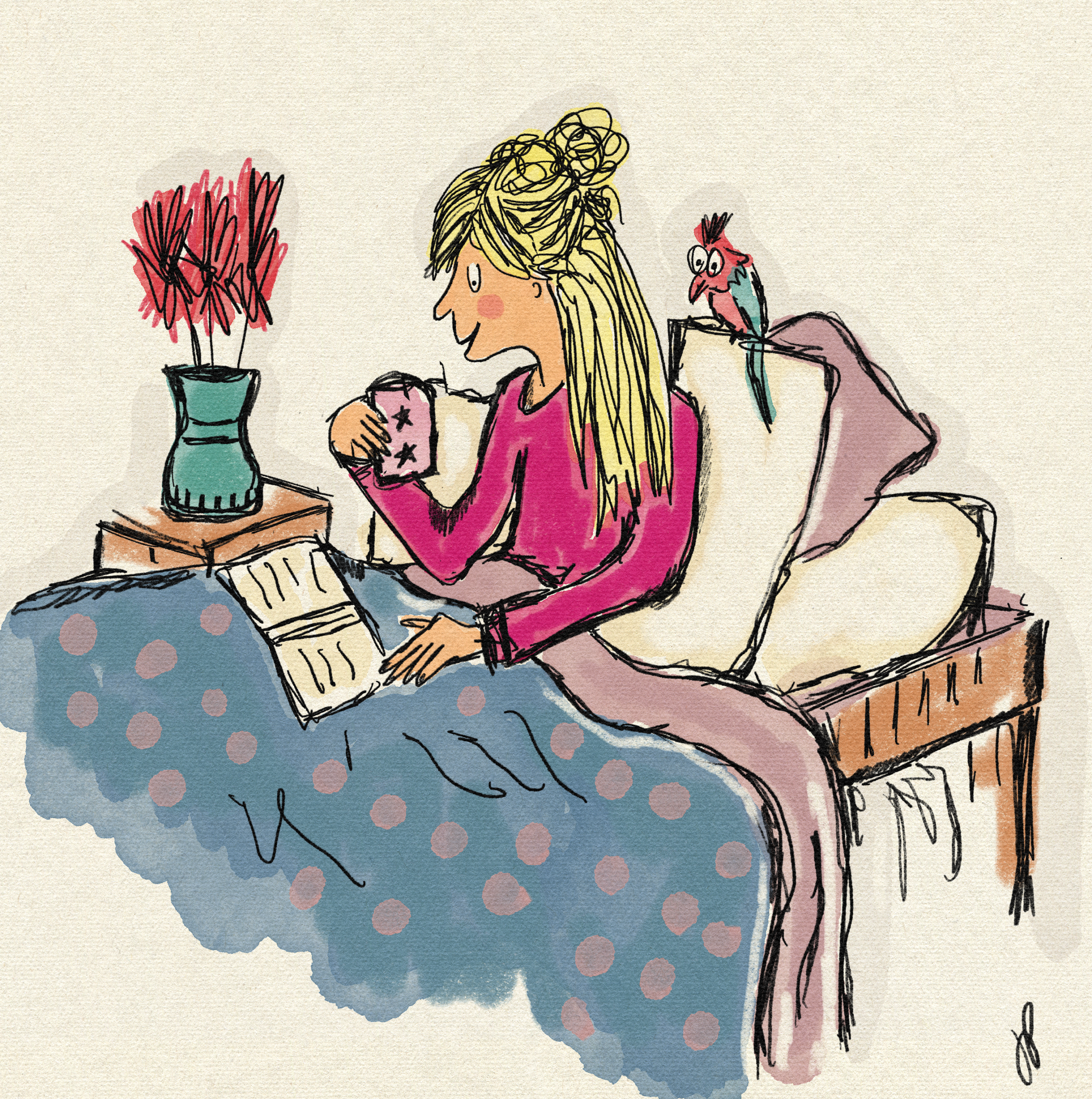
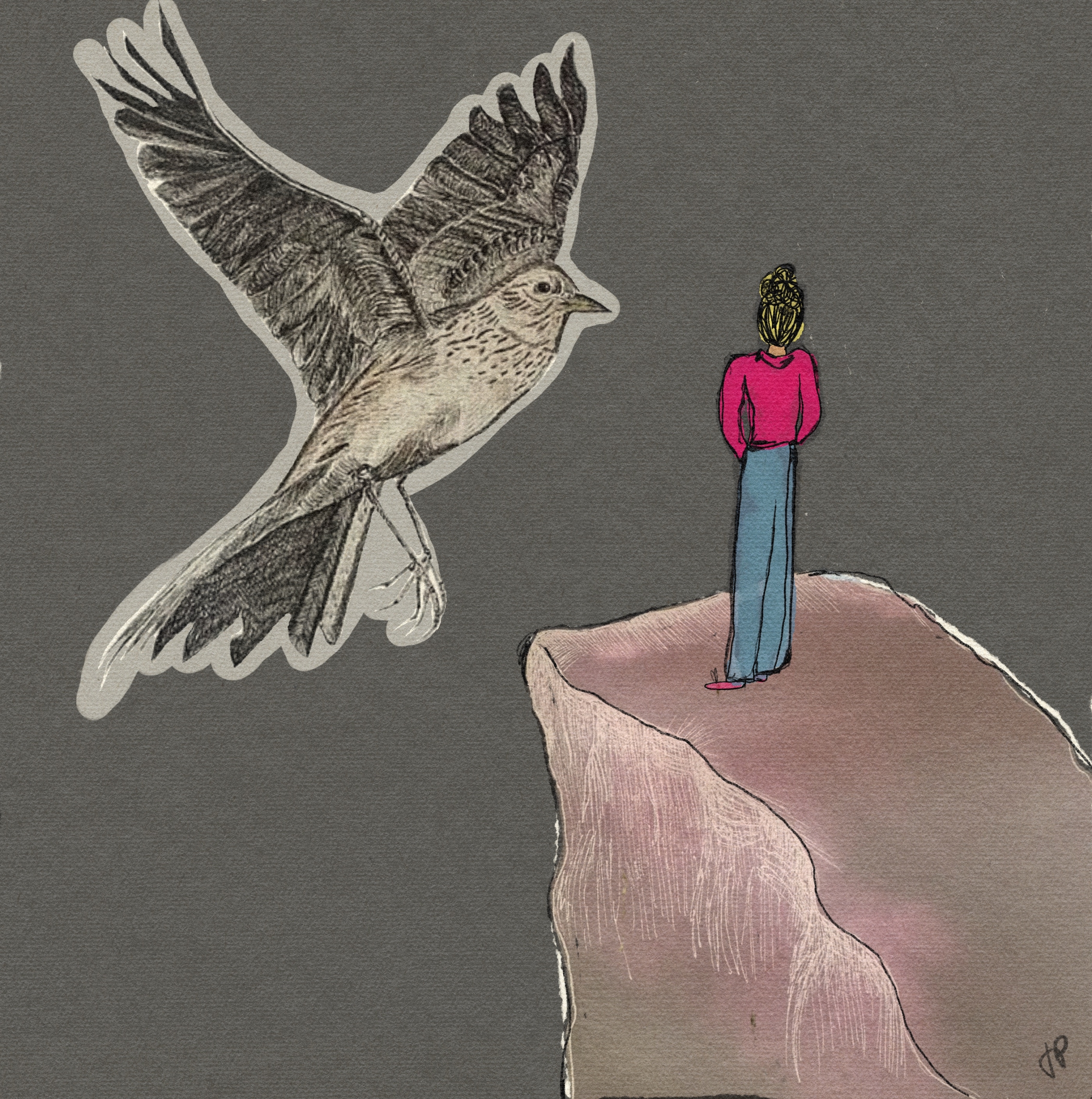
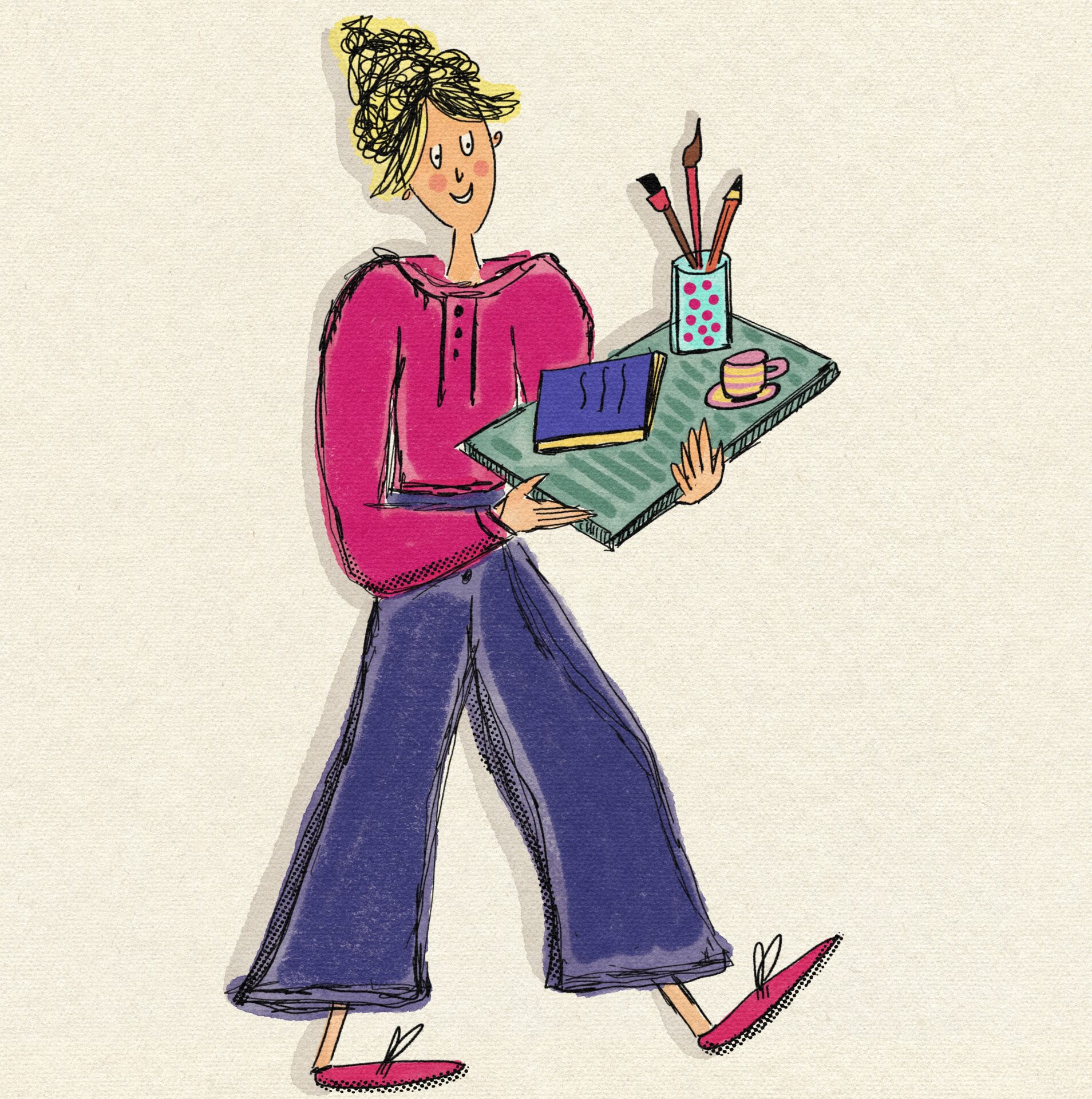
My hopeful dreamscape drawing for a Sunday morning in a week that was a lot. Coffee and books and pootling. And a bird that appears to have arrived in the night, an excellent bonus.

****

This week, I’ve been treating myself as something of an experiment. You see, I’ve been holding things that are too big for my hands; illnesses and upsets and responsibilities and the kind of things that happen when we enter periods that are hard but very human.

And I’ve found myself with somewhat jumbled insides. Thoughts that race in the night. A tummy that finds she is upset. A need to entertain all manner of worst-case scenarios, not as a form of catastrophizing but so I am prepared.

I know it’s easy in these moments to push creating to the side, but my want is very much to draw her nearer. And so, I’ve been asking myself questions:

What helps? What can we rely on? What’s possible to do?

How might leaning into creativity helps us?

Balancing The Energies

One of the most useful ways I’ve come to understand emotions is to consider them in terms of energetics. In practice, this means reflecting on their elemental qualities.

Typically, anxiety is cold, light, and fast moving, the emotional equivalent of being caught in a crosswind. Our thoughts are un-catchable, un-tameable; our body free of the kind of solidity that keeps us anchored to the ground.

To bring balance, we want to think of its opposites; things that are warm, earthy and grounded. We can contemplate this from all perspectives, from what we eat through to the kinds of clothes and materials we might wear.

From a creative viewpoint, consider things that are tactile, weighty, obvious. Where it’s possible to have a felt relationship with your tools. Where you create something that has a solidity to it, and in doing so, bind yourself to the same sense of earthiness.

And if you can, take big sheets of paper and get down on the ground.

Think oily crayons that leave the maximum amount of residue on the page. Equal parts the paper and your fingers.

Lashings of paint that pours onto paper.

Watercolour rich in pigment that dances at the slightest suggestion of contact. That does not play by any rules.

Thick marker pens, where the aims of our marks are not to be delicate or subtle but to stamp themselves- ourselves- literally and metaphorically, down upon the page.

Colours that declare themselves.

Lines like lanes of licorice.

Layers so thick they create something a body can sink into.

We can bind ourselves to our tools, and if we allow them to, let them carry us to ground.

Create What It Is You Need

Isn’t it the most amazing thing, this capacity we have for imagination? How we can use it to create what we need?

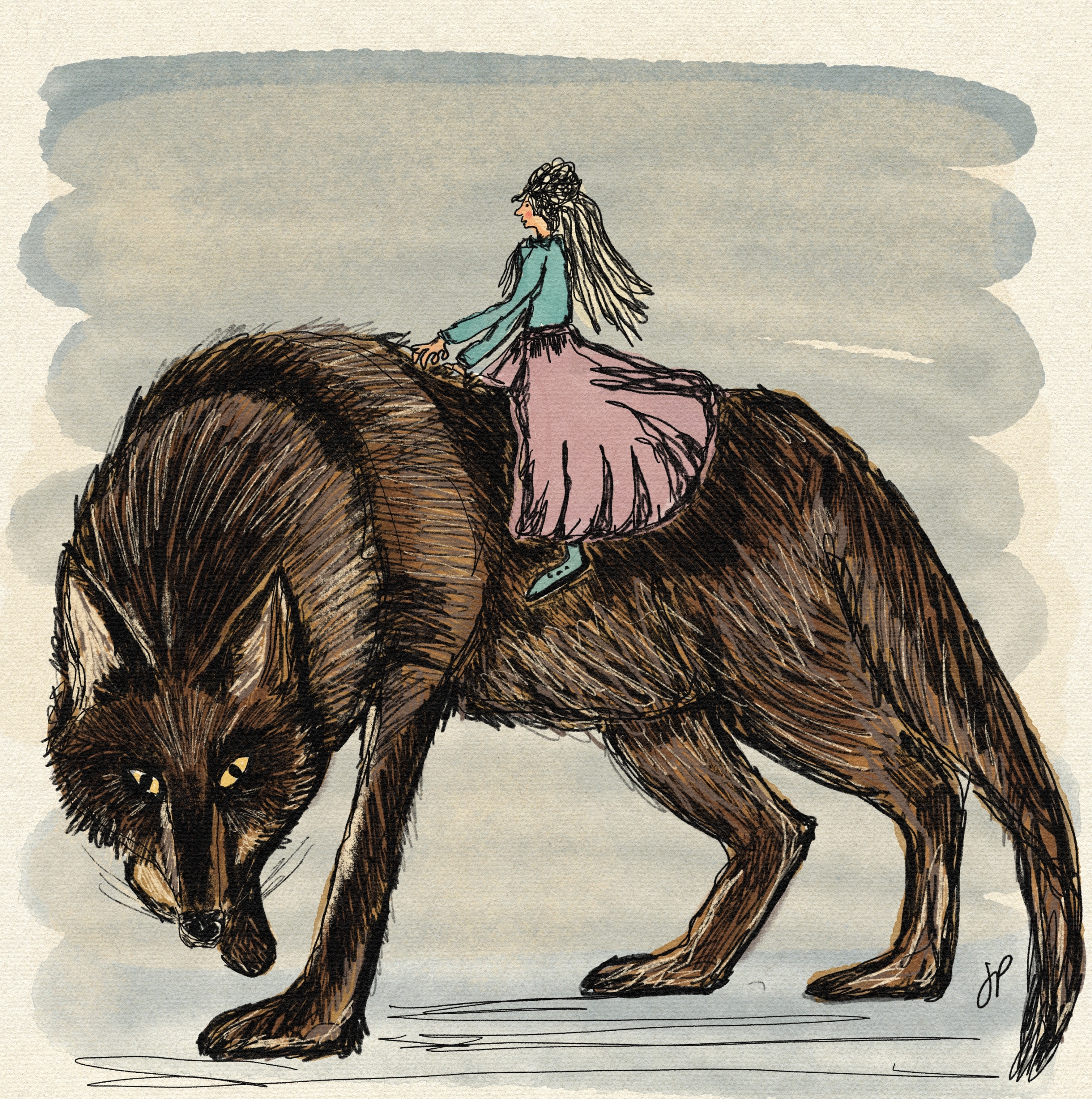
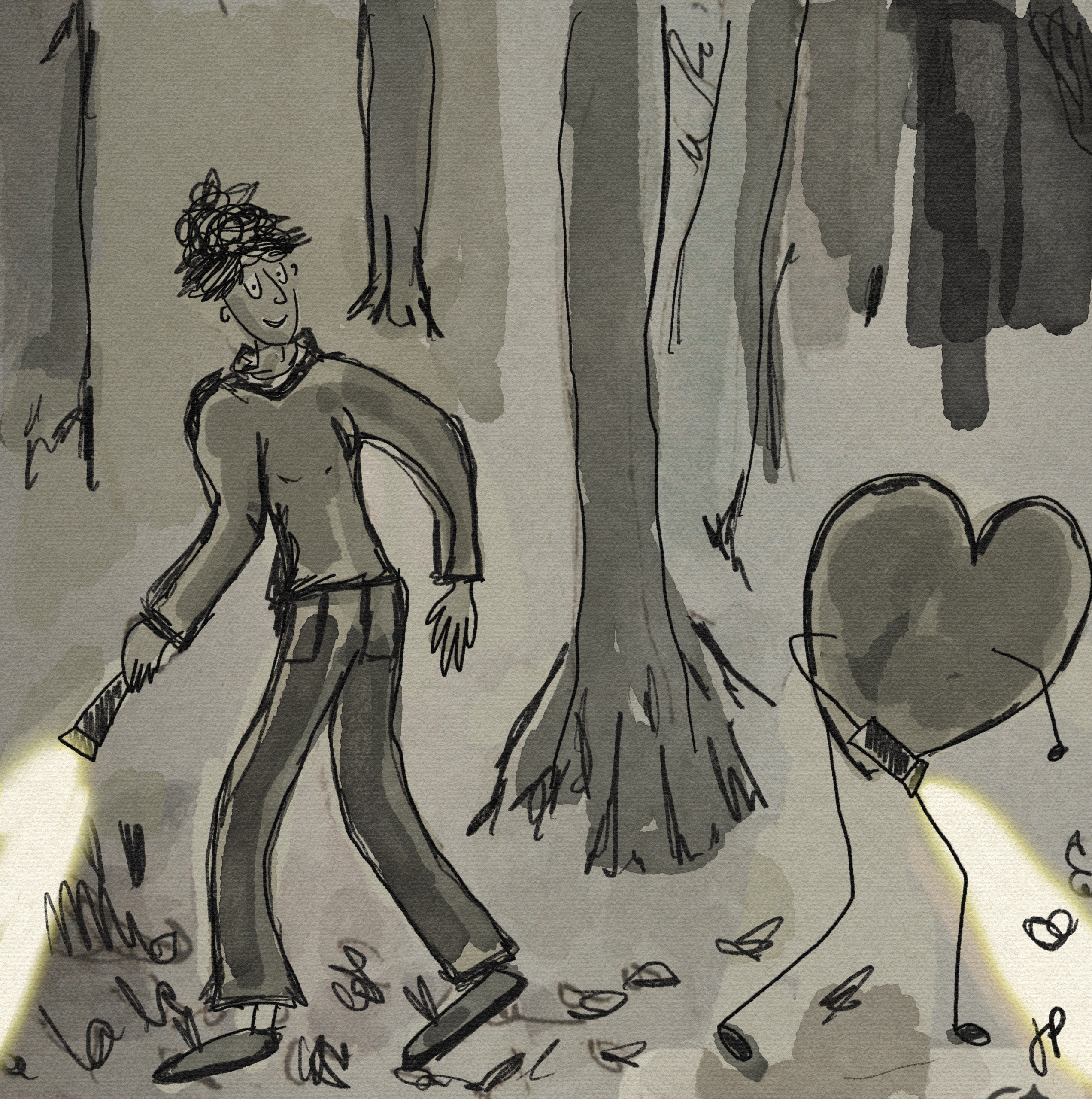
Yesterday, I drew myself a wolf. He was strong and free and magnificent. And he was fierce. I think that’s what I liked most about him. I rode on his back and threaded my fingers through his fur. I suspect we were venturing through the forest- I let him lead the way. It was getting dark, and even though I’ve never been that great in the deep night-ness, I felt calm and unconcerned.

Most of all, I enjoyed the experience of being carried. And of rest. I enjoyed that I didn’t have to take care of things, if only for a moment.

All this from a drawing. Of course, all this from a drawing.

The thing is, you don’t have to create your own world to be able to find respite in that another. We get to support ourselves this way. We get to be intentional about what we take in and surround ourselves with. To assist ourselves in traversing emotional territory that feels bumpy or unwieldy.

We often say that we ‘lose ourselves’ in books, or music, or art but I don’t see it quite this way.

I think we find ourselves there; the parts of us that are still convinced the world is magic.

The bits of us that recognize beauty as a human need.

The pieces of ourselves that we might have felt, only moments prior, disconnected from.

We go into art to retrieve them, and then we gather them up, and turn back towards home, holding what it is we need.

Hands & Repetition

Brains and thoughts like the be guided by the hands. We are designed for the extraordinary simplicity of repetition. Of rhythm. When our minds are dancing to a scattered beat, it’s a balm to re-establish a more coherent cadence with our hands.

Some ways to play with this include:

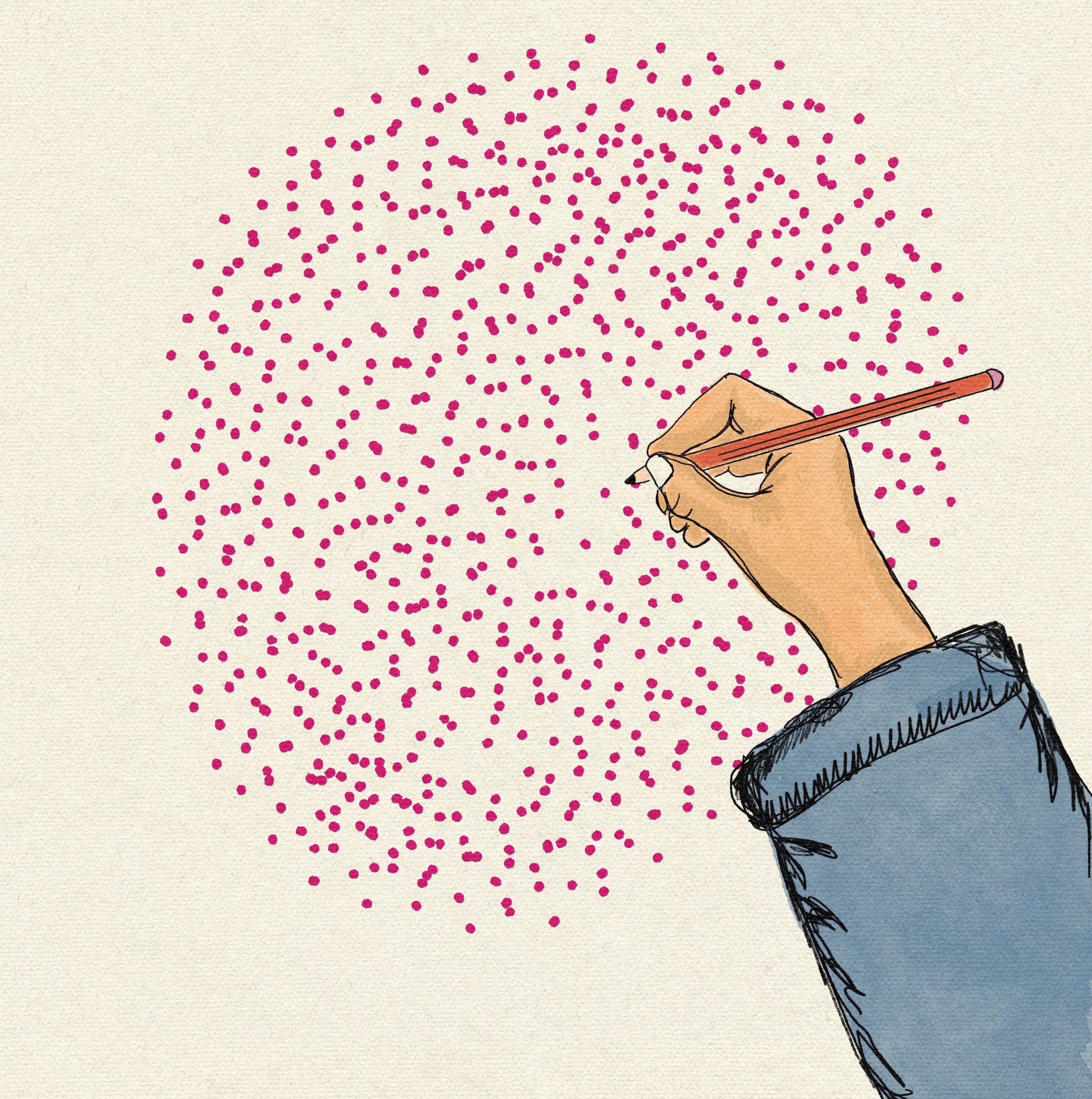
  • Drawing repetitive shapes. Create an outline and fill the whole thing in with circles.
  • Drawing spirals, first from in to out and then from out to in. Go slowly and see how closely you can keep the lines together.
  • Blind contour drawing. Look only at your subject and not down at the paper. Match the speed of your hand to the speed of your eye.
  • A constant infinity sign, where the centrepoint of your circles matches your midline. As you move from left to right, let your pen traverse your body from side to side.

We all have these moments, you know, of inner wobbles. Of emotional energies that consume us. It’s not an aberration, but shared humanity.

And it’s important to remind ourselves- sometimes over and over- of the ways that creating and the body can lead us back. Of the ways we can take our own hands and feel our way towards more steady ground.

Happy creating,

xx Jane

Always good to leave on a smile, isn’t it?

How Do You Develop Creative Courage?

We’d been talking of books and illustrations and projects wot matter to us when one of my people asked:

How do you develop creative courage? How do you know you have what it takes to start?

You can imagine my delight. Creative courage! What a thought!

Let’s traverse our way through the short version of my answer together…

Where I want to start, Dear Friend, is to talk about your heart, because this is who you’ll return to; this is who you’re riding shotgun with, and this is where you’ll seek the answers when things get bumpy or drawn out or things don’t go to plan.

You’re inevitably going to reach for the love. At some point, you’ll have to adventure back to your heart.

I know it’s quite a common story to hear that writing or drawing or insert your thing here is hard and laborious and going to cost you your soul, but I don’t believe that’s the case at all.

I believe it’s quite the opposite; that to be in connection with your creative force, your creative spirit- to understand why do the thing that you do- will be your creative tuning fork. Your compass.

We do need to be aware that we are embarking on a journey and it’s not one that’s easily supported by world of which we are a part. So, if creative courage is what you are interested in developing then please give some deep consideration to why your creative practice is important.

Why do you want to do this?

And you know what? A perfectly acceptable answer is just because you want to.

I’m of the firm opinion (and I seem to have a lot of those these days) that the whole purpose of us being here is to follow what we love, and to send things out into the world that contribute to mutual flourishing.

I believe that to make and create is how we respond to life moving through us; that the ideas, inspiration, thoughts that we’re gifted with mean something. Because I’m personally interested in how creativity facilitates wellness and belonging and our connection to the natural world, I understand my own creative practice to be of great importance.

That it’s a practice of wellbeing not only for me personally, but for those I share my life with; my human and non-human kin, and the land where my feet rest, my home, my place.

When I position all those things at the start point with me, I feel buoyed by a sense of purpose that’s vital and enlivening. That all the things that I’m in connection with- my birds, my trees, my plants, my horses- are all standing at my back. That all my natural allies are here with me.

So, the main question I want to ask (and remember, your answer can be as small or vast as you wish) is why is this thing you want to make important to you?

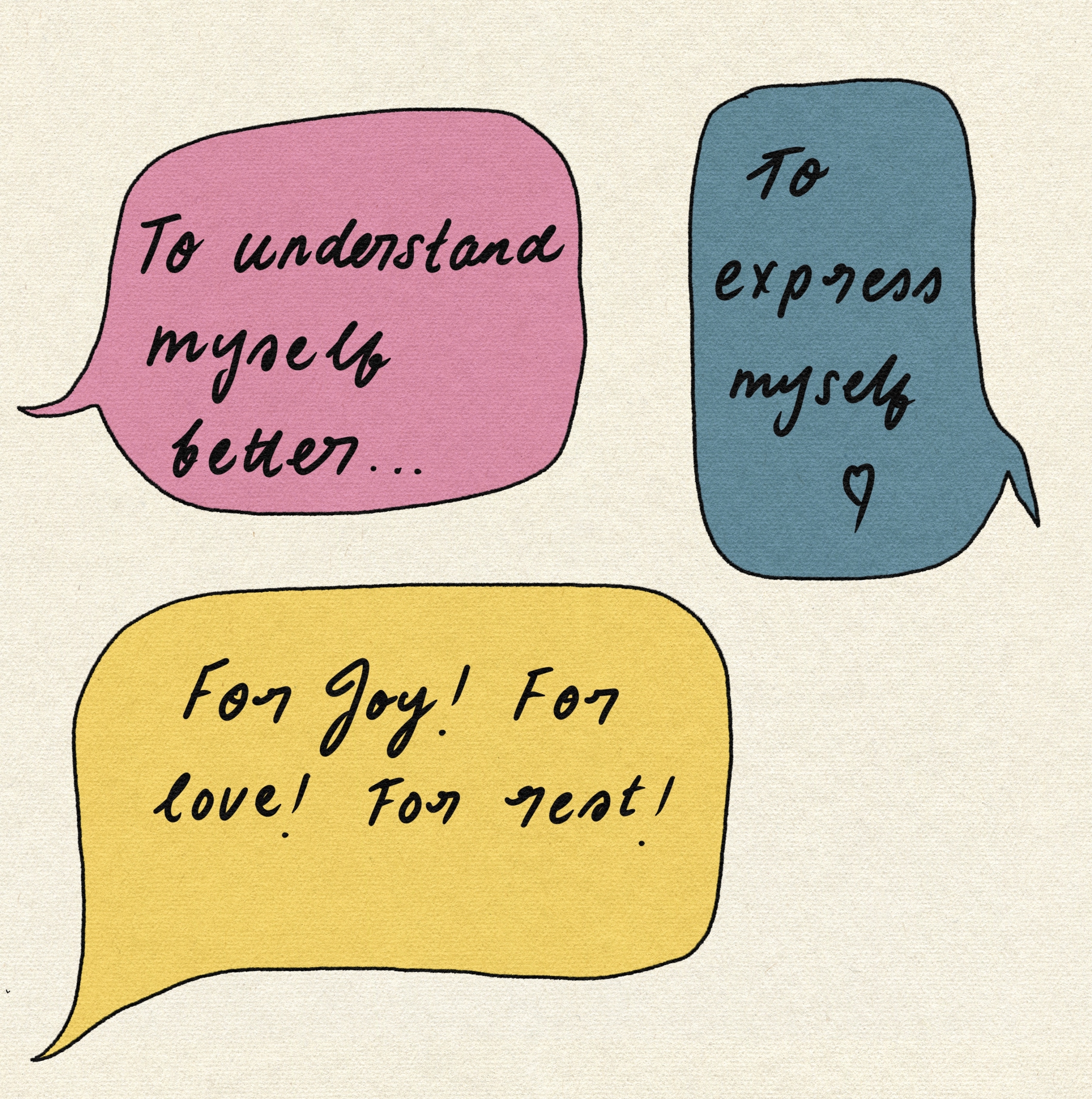
In my group, Creating Wild, there are many reasons that I’ve heard. To have time to slow down. To move through the world at a more human pace. To make sense of things. To understand ourselves better. To share our voice, to contribute to the conversation. For love, for joy, for rest. To have time out from the push and pull. It all matters, it’s all relevant.

Once you’ve identified your why, you have the fuel, the sustenance, the juice to power not only this magnificent thing that you are setting out to create, or habit that you are wishing to begin, but two other very important things also:

The ability to say no (to all the things that will attempt to pull you away from creating), and the courage to meet creative risk.

Let’s talk a little more about creative risk (we’ll loop back to the ‘no’ part some other time), because the thing with creativity (and what I consider to actually be the most joyful part of creating) is not the end product that you’re left with, but the creative energy that you’re in relationship with, and who you become on the other side.

That’s the thing about creating— you never enter into the process and come out the other side the same.

What most commonly prevents us getting started is not a lack of skill or ideas- the skill we can develop and with a couple of gentle prompts, it’s likely that the ideas will come. What gets in our way is perfectionism or control patterns, where we attempt to maintain a fixed idea of who we are while we’re in the process of creating.

Creative risk isn’t referring to the work or the project or the thing you want to do; it refers to your sense of self. Your own identity. What you understand you’re good or bad at, what you’re skilled at and what you aren’t.

This is what we are risking; things not working out, meeting different parts of ourselves, exploring things beyond the edges of what we understand ourselves to be good at.

The whole nature of creating means you’re bringing something into existence that’s not yet known. It’s a collaboration not only this creative force that swills all around you and beyond you, but with the future version of you waiting to be brought to life.

You’ll feel this through the language of feeling, where this experience of creating comes alive in your body. Your mission, in this moment, when you feel that energy bubbling towards the edges of your skin is not to confuse it with something being dangerous or wrong. Not to let it trip you into an unhelpful story.

This is just your body registering the experience, understanding you’re in the presence of new-ness. That literally, you are making yourself new.

It’s nothing to be afraid of. It’s something to be celebrated and explored.

So as you begin, I have two things I would love for you to do:

Firstly, think about your why. Why do you want to do what you do? What moves you about this? What excites and tickles you?

Secondly, to start to notice when your body is registering creative possibility. When you feel an increase in energy in your system, and when you label that in a way that causes you to turn it into something negative or shut it down.

Increase your capacity to hold that creative potential. It’s a practice, like anything else.

I can’t wait to see what you make and create,

xx Jane

✏️ A Creative Prescription: A focused piece of creative mentoring to help you get unstuck and figure out your next step.

🎧 The Art of Bad Timing: A Free 3-Part Audio Series focused on reclaiming your creative time (even when life makes it feel all a bit impossible).

Creating Wild: An online community for people who want to make things and would very much like creating to be a big (or bigger) part of their (somewhat messy, fabulous) life.

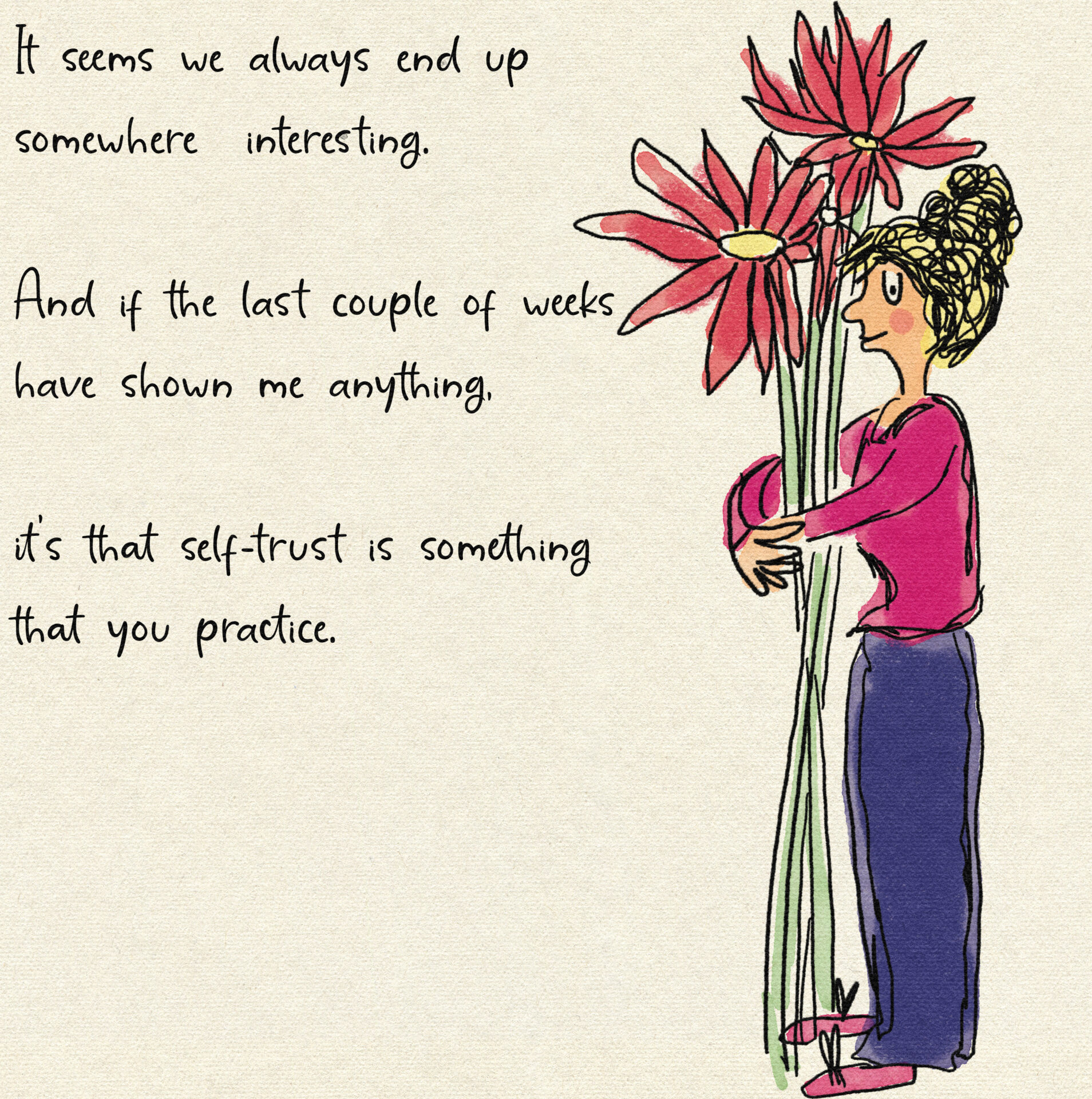
A Little Story About Trust (Turns Out It’s Something That You Practice)

xx Jane

Creating Without The Crash: Are You All In, then All Out?

There’s a thing in our house we refer to as ‘Contractor’s Flu’. Back when my husband was a documentary-maker-person, he would have back-to-back contracts for the twelve months up ‘til Christmas, and then for the two week’s he had off, he’d get the flu. As predictable as clockwork.

A similar thing happens to many students; over the course of a semester or term, internal forces are rallied. You do the work, submit the assignments, possibly party on the weekends, your internal dials set to go, go, go until you slam up against the holidays and find there’s nothing left to draw on any longer.

I mentioned in my post last week that I was making some Creative Prescriptions for willing members of my group, and when outlining the situation for me, one of them suggested they enter a competition for their writing. They wanted to use the deadline as a driver, a reason to push themselves but the push was the self-flagellating kind.
Call me crazy, but I’m rather attached to keeping suffering separate from the creative process. It’s an overdone trope that I’m keen to leave behind.

And in the same breath, I understand how we’ve got ourselves into this weird perspective pickle. And that if we do want to create from a place that is sustainably joyful, we might need to figure out how to extricate ourselves from this pattern of making, creating and working that lurches between acceleration and hard braking.

Where we begin to crave a less adrenalised ‘creative maintenance energy’ as the truly desirous energy kind.

So, what’s the deal with the go, go, go… and then boom, collapse?

At this point, I’m going to do something a bit annoying and link you to another thing I wrote. It goes into the nervous system mechanics in more detail, and also saves me repeating myself, which you’ll find boring. You can find that article here.

In a nutshell:

When we refer to the sympathetic nervous system (conversationally known as fight flight) or the parasympathetic nervous system (the place we operate from when we are creative, conversational and relational) we are talking about systems of movement.

Everything that we do—literally everything—is rooted in one of these two systems. This background understanding is important for what I’m going to attempt to explain right now.

So, play with me for just a moment…

Let’s move forward with the understanding that you put your attention on many different things over the course of your day. And the kind of attention you pay to each of those things is also different, depending on the context.

For instance, how you attend to something related to work will typically be given a different type of focus and attention from something that you feel more curious and playful around, that you consider to be a hobby.

These differences aren’t inherent, but that’s typically what we find.

Our learning styles are much the same. How we’re encouraged to learn, our particular type of brain and nervous system, the environment that we learned in, the person that we learned from all shape our learning experience. And depending on what we’re dominantly exposed to, we develop learning and working behaviours that correlate with those conditions and habits.

Learning and creative habits that are rooted in the fight flight nervous system usually form when early conditions were built around rote learning and repetition — where there was only one acceptable pathway that led to a single, expected outcome. In those environments, the body learns that action is something to “get right,” not something to explore.

Conversely, the creative nervous system develops through play-based learning. That doesn’t mean there was no outcome or intention, but the route to get there remained open. You might have had a starting point and a desired end point, but your brain and body were free to figure out how they wanted to organise themselves along the way.

What does this mean in practice?

Let’s use the student as a working example. Say your learning style is rooted in the flight fight nervous system. You approach a project as though your predator and prey. You focus in on what needs to get done. Your awareness is channeled predominantly towards the object of your attention.

As we move into the fight flight system, our sensory focus narrows. We block out all extraneous information the brains deem superfluous to our mission so we can follow the mechanisms of survival.

Fuelled by a cocktail of fight flight hormones, the body rallies. You become sharper in all ways that correlate with that need; intensely focused on the task at hand, channeling all your resources towards the desired outcome- and all other systems that in this context are considered secondary- digestion, sleep, hormone balance for example- get turned off or down.

The survival nervous system is a system of compromise. The working deal is that your overall wellbeing is negotiated for the greater aim of survival. For short bursts, this is a contract we’ll gladly shake hands on. But when it becomes our dominant way of living, learning and creating, then sooner or later we find our energy has a shelf life. And before we know it, the pendulum has swung over to exhaustion, depletion and collapse.

Put simply: It’s not a way of creating, making or being that is sustaining.

We are taut elastic bands that, under tension, can only hold their shape for so long before they become limp and floppy. Our bodies are really much the same.

Parsing Apart Creative Energy from Adrenalin

A fascination that I discovered early on when working with movement-related-nervous-system stuff, is that when someone shifted out of fight flight and into a more sustainable mode, they described their experience as ‘sleepy’. I heard this repeatedly:

I’m tired, I’m drowsy, I feel kind of foggy headed.

At first, I wondered if they were just really tired but then it became something more. I realized that when a state of fight flight living has become normalized, anything separate to that feels flat, inert, and kind of wrong.

So much so, that the closest association we have with that state of being is often sleep.

I’ve been fortunate to have people stick with me long enough to emerge the other side. Where the ‘un-adrenalised’ state of being is no longer novel.

Where the brain and nervous system start to respond and experience in ways that are associated to sustainability and longevity, not just survival.

But it’s almost like a detox. A willingness to inhabit a different state of being long enough to wind down. And a belief that you won’t lose the parts of yourself that you want to hang onto in the process.

That you’ll still be ‘yourself’ when you come out the other side.

How does this relate to our creating?

In all the many ways. If we approach creative projects from a place of fight flight, then it’s likely that this swing between acceleration and collapse will be familiar.

You’ll tend to find it easier to make and create when there’s a deadline, a fixed outcome or set of objectives for your work, and outside of that, day to day creating can feel absent, uninspiring or illusive.

It’s not that you can’t, don’t or won’t get things done, but there’s a cost. And one that increasingly shows itself over time to the point where (heaven help us) we wonder if we should pack in this whole creating thing altogether.

So, what’s the remedy?

I don’t have a clear and finished answer. After all, the truth of each of our creative lives can’t be condensed and finished off in tidy loops.

It’s also dependent on whether we recognize this accelerator-brake lurch as our dominant way of living, or our dominant way of creating- they aren’t the same thing.

In the case of the former, we need to ease the system out of a place of chronic fight flight (a combination of sensory activation, novel movement, and perspective shifts that might currently support a way of being that’s reactive and unsustainable).

But if we were to consider this solely from the position of creating, I feel like the nudges can afford to be more subtle.

And I suspect a big part of that answer might be joy.

Along that line, I have a question for you:

What do you want to believe about your creative practice?

I’ll go first to get us started:

I want to believe that it’s a vehicle of expression.

I want to believe that it’s collaborative; that I’m in conversation with this vast creative force around me, and that if I just stay in that flow, creative experience is endlessly available to me.

I want to believe my creative self is someone who can be trusted. Whose thoughts I can listen to and act upon.

I want to believe I can create not from a place of urgency or a need to prove, but from a place where I’m in conversation with my insides, an alchemy of sorts, that I share with the wider world.

That it doesn’t have to be hard. That it can be light. That it can be simple.

That I can accept who it is I am and keep on going. That this will always and forevermore be the start point.

That creativity is not a breakthrough, but a series of ever-present openings.

And that as long as I stay faithful to the moment, creativity will always be faithful to me.

Creating from a place that is sustaining requires internal calibration.

…And even if we struggle to understand exactly what it is we are aligning or calibrating with, we can perhaps start to understand it better through what it’s not:

Creating is not urgent.

It’s not a test.

It will not ask you to sacrifice yourself to the process.

And it does not require that you suffer.

And if you believe contrary to the above, consider that what you’re holding onto, your ways of approach are something learned rather than inherent.

It’s a conversation with life moving through you, and life shows up in all manner of varied ways.

There is a tricky part…

Of course. (Re)committing to our creative practice first and foremost as an essential part of our wellness will inevitably make space for all these outdated thoughts and feelings to rise up to the surface. It can even poke and provoke them.

You’ll have to pace yourself, no doubt. To observe the gnarly, pesky thoughts but not invest in them. Perhaps this is the Zen part of creating. To grow your capacity to both hold and shed what’s no longer useful and continue to create along the way.

I have so much more to add to this- the logistics, the fine-tuning, the body bits, but this is where we’ll leave it for today.

It’s all practice, isn’t it? Creating from a different place of being. It seems to me like a worthy thing for us to commit to.

xx Jane

A thing that (might) be of interest to your fabulous self:

This weekend, I’m teaching a workshop where this whole conversation *points to the above* is going to be our focus. It’s going to more practical than theoretical. I’m continually ask myself as I put the bits and pieces together, how does this apply? How is this useful?

If this is interesting to you and you’d like to adventure with me as we explore it together, come join us. You can learn more about it here in Creating Wild.

What If Your Kind Of Tired Isn’t Fixed By Sleep?

A week or so back, I pitched to my membership group an offer that I hoped would be appealing. If you’re feeling stuck or you’ve lost your creative mojo, I said, tell me what’s happening, and we’ll find a way forward together. I called them Creative Prescriptions; you answer a series of questions detailing the specifics and constraints, and I send you a short video back outlining some things that I think that might be helpful.

Tell me what’s in your creative heart! Give it to me straight!

I’ve made just over 30 Creative Prescriptions since then, and as you would expect I noticed patterns. Familiar themes that came up repeatedly. And the biggest creative kryptonite (perhaps no surprises here) was a lack of energy and tiredness. A proliferation of I’m just so flat, or I can’t seem to find the motivationor I have no energy left to give.

The thing is, there’s tiredness and there’s tiredness. Not all tiredness-es are the same. There’s the tiredness that’s almost kind of pleasant. The result of a body well used, of a mind that’s been put through her paces, and where the answer is both welcome and obvious: a night of blissful sleep. A binary equation where I am tired = Sleep is the right and proper answer.

But for the second kind of tiredness; the tired-to-your-bone’s kind, where no matter how high you lift your feet, your toes are still there dragging, is quite a different beast. Because that kind of tired, somewhat confusingly, isn’t remedied by sleep. In fact, you could sleep for two years straight and find that you wake up in the same state that you started.

Call it burn out. Call it exhaustion. Call it whatever you like. It’s epidemic. And what you’re experiencing in this state is a body with completely frazzled edges; a nervous system in a state of collapse, where tiredness and lack of energy is a symptom, but rest is not the total answer.

So, what’s the deal here?

For anything I say to make sense, we need a basic understanding nervous system function. A quick rundown now:

When your nervous system is responsive and adaptive, your sensory system is feeding information to your brain all day long. There you are, going about your business, feeling your way through the world, and your brain is using that information to answer one foundational question your entire existence is based around:

Am I safe?

The answer arrives in three main forms:

Yes.

No.

Maybe.

Yes, you pass Go, collect two hundred dollars.

No or maybe and your brain and nervous system choose for you the reflex survival (or fight flight) response they consider most suited for the situation.

Under the umbrella of active fight flight states we have fight, flight and freeze.

We refer to them as ‘active’ because there’s a lot of available energy that we can draw on to heighten our powers of force and acceleration.

If the brain perceives that one of these defence mechanisms is not available to us, it takes us into the (rather depressingly titled) collapse or conservation of energy mode states. This is where you turn in on yourself. Your sensory dials get turned way down (remember this part). Your metabolic processes and general functions switch to idle.

If we were thinking about the brain giving the body an instruction at this point, it would be ‘don’t move and hold onto your resources’.

It’s basically your brain and body’s attempt to stick around on this earth as long as possible, believing your capacity to move or tend to your base survival needs are limited. So, you hang on to what you’ve got.

The thing is, in true survival situations, this process is both loving and benevolent. These animal bodies of ours are designed to live in a world that is movement oriented and sensually inspiring. Our survival nervous system is our bodies inbuilt protective system, designed first to mobilize for survival purposes, then (should that option not be available) to preserve our hearts and wellbeing by shutting down our senses to potential harm.

At this point, should neither of those options be available, it will lovingly hold our hands as we die and move on to whatever it is we go when we leave this earthly realm.

It’s an elegant and beautiful design.

The glitch in the matrix is not something we’ve had a software update for. Instead of this animal body being part of an animal world dedicated to mutual flourishing, we find the lives we are forced to lead out of sync with our base requirements. A dysfunctional, human-centred world that is resulting in dysfunctional minds and bodies.

Without venturing into the details, the end result is this:

Many of us are finding ourselves in a state of shut down or collapse that’s morphed into a dominant state of being.

And amongst many other things, it’s leaving us in a perpetual state of exhaustion that sleep alone doesn’t seem to fix.

Why doesn’t sleep or rest revive us?

In collapse or conservation of energy mode, our internal processes are turned way down. Remember, everything the body does has functional purpose. The purpose of collapse or conservation of energy mode is exactly what it says on the box; to keep you around for as long as possible with the expectation of limited movement possibility and limited resources.

Whereas in more active fight flight states or the parasympathetic, our pumping, vibrational mechanisms are still high, in conservation of energy mode / collapse, they turn into marshmallows.

From here, we enter this highly ironic situation where we want to sleep all the time, but the sleep that we get is kind of shitty, the paradox being that your internal systems are functioning at such a low frequency, that your own brain will wake you up just to keep your system alive enough to function. A vicious cycle that keeps spinning round and round.
Ok, so what’s the answer?

Two main recaps:

  • Sensory information is what the brain uses to understand its place within the world
  • Sensory information gets turned way down as part of the sympathetic / fight flight response (and especially so in conservation of energy mode or collapse).
Which means if there’s one thing that becomes a priority, it’s bringing the sensory system back online.

The thing to remember is this:

If collapse has become your dominant state of being, it’s likely for one of the below reasons (there is a lot of nuances of course but for the sake of general discussion):

  • That your body is truthfully reflecting an outer reality that needs to change before you can
  • That you are stuck in a maladaptive cycle, where at some point, you went into collapse and didn’t have the necessary skills or means to get out of it.

Another thing:

It’s nuts (in my opinion) that we have to work so hard to keep ourselves functional and sane. The fact we even need to talk about ‘nervous system function’ and consider how to have healthy one is ludicrous. It’s shows what a mess we are all swimming in where being able to expect a healthy, vital body has become so effortful.

Frankly, I have many other things I would rather talk about than the nervous system. There are loads of other more fascinating things that my capture my attention. But to get to those- creating, making, the magic of this world around us– we need to be capable of taking it in. So here we are, figuring out this stuff out about our bodies.

Let’s keep going so we can move on to the good stuff.
Easing Your Way Out

One of the more difficult things about navigating your way out of collapse is that you’re often going to have to ignore what your own body is telling you. The action that you take is going to be very specific and but nonetheless, it is going to feel like it requires energy you don’t have available to spend. And in essence, you are right. This is the pickle.
Here are some of the essential principles for us to work to (bearing in mind I’m trying to keep this to essay length when the reality is this could be expanded to an entire thesis):

Movement

Your body needs to move, but only in ways that are functional and gentle (otherwise you’re going to drive yourself deeper into the place you are wanting to emerge from).

Ask yourself (reducing yourself to a brain, a body and a nervous system):

How would a body move if it were taking care of its basic needs?

It would move in the world outside and it most likely walk a lot. It would climb hills occasionally and find itself moving all over different surfaces. It would bend to pick things up. It would seek and gather.

So much of our modern movement is decided by the mind and not the body. We workout to look a certain way, to stay a certain size, to burn a specific number of calories.

Forget that. Think of movement for wellness and joy.

How would a healthy, sensing body want to move?

Now commit to some version of that, as regularly as you can.

Activate Your Sensory System

We think of the senses as the usual five senses, but there are actually nineteen scientifically proven senses that the body integrates to keep your sensory self-online. When we are reawakening the sensory system, the mechanoreceptors are some of the first to flash to back on green. They are the ones responsible for our sense of touch, pressure, and the relationship of our body to the world is it directly a part of via those parameters.

The wonder combination to consider is novel movement (and novelty is anything that requires your focus and awareness) in combination with sensory stimulation of some kind.

This means, if I walk but place my attention to how my feet are landing on the ground, and the changes pressure relationships, I can take something ‘regular’ (like walking) and turn it into something that is both novel and enlivening to the sensory system.

A good practice is to stay with a point of focus for a week or so, and to always think of what you are considering in relationship to something else. I call this a two-point practice: focus on something on the body, and outside the body, and consider them in relationship to each other.

Walk and focus on how your feet make that happen- where and how they land and what that feels like- for a minute or so at a time. Do this for a handful of times a day, for a week or so then switch your focus to a different part of the body.

Activate Your Creative Desires

So much of the reason that we found ourselves in this collapse place is due to abdication of personal, creative desire; our creative selves have been trampled over in deference for what we feel like we should be doing or have to be doing to be active, useful humans in the world- but it’s not without consequences.

These days, I have a robust creative practice. I write and draw daily, and if that doesn’t happen, I really feel it. If my creative energy is not used, it comes at me sideways; I am grumpy, depressed, feel flat. I am unpleasant.

I think of all the years I didn’t tend to my creative wellbeing and the cost of that. All that energy rampaging round my insides without useful or imaginative direction.

I am not isolated in this- I believe this is true for everyone- I just happened to find myself in a place where the work I did remedied by insides (which, believe me were really kinda shaky) to be point where I fell in love with my creative self.

Let yourself feel your own curiosity and learn to trust her. Not as something nice to do but as something essential and important for your wellbeing.

Your Prescription

I know, it really is a kicker and I know that it’s unfair. This IS going to take energy that you feel like you don’t have, so micro-dose things at the start. The awareness of what’s happening is essential.

Write a prescription for yourself (or I will do it for you!) and follow your own instructions. Take the decision making out of it and understand, if you identify with anything that I’ve said above, what is required for your own wellness.

I don’t have a better word for it yet (I’m working on it) but some form of accountability is good. I noticed with the prescription that asking people to check in with me in the group with their creative practice has been helpful.

We need to surround ourselves with people where the thing we want to do (Make art! Write the book! Tinker with pencils! Doodle!) is not only normal but supported and encouraged. I have my membership community and the door is absolutely open to you, but wherever and however it suits, make it your mission to find your people.

If (when!) you have a day where it all falls apart, it’s completely fine. Just pick up the thread as soon as you can. This is not a one-shot wonder; this is your life, and you aren’t something to be fixed. Let’s embrace what we’ve got and revel in as much of the good stuff as we can.

If you have questions, leave them for me below. Happy to chatter if it’s helpful.

Much love to your gentle selves,

xx Jane

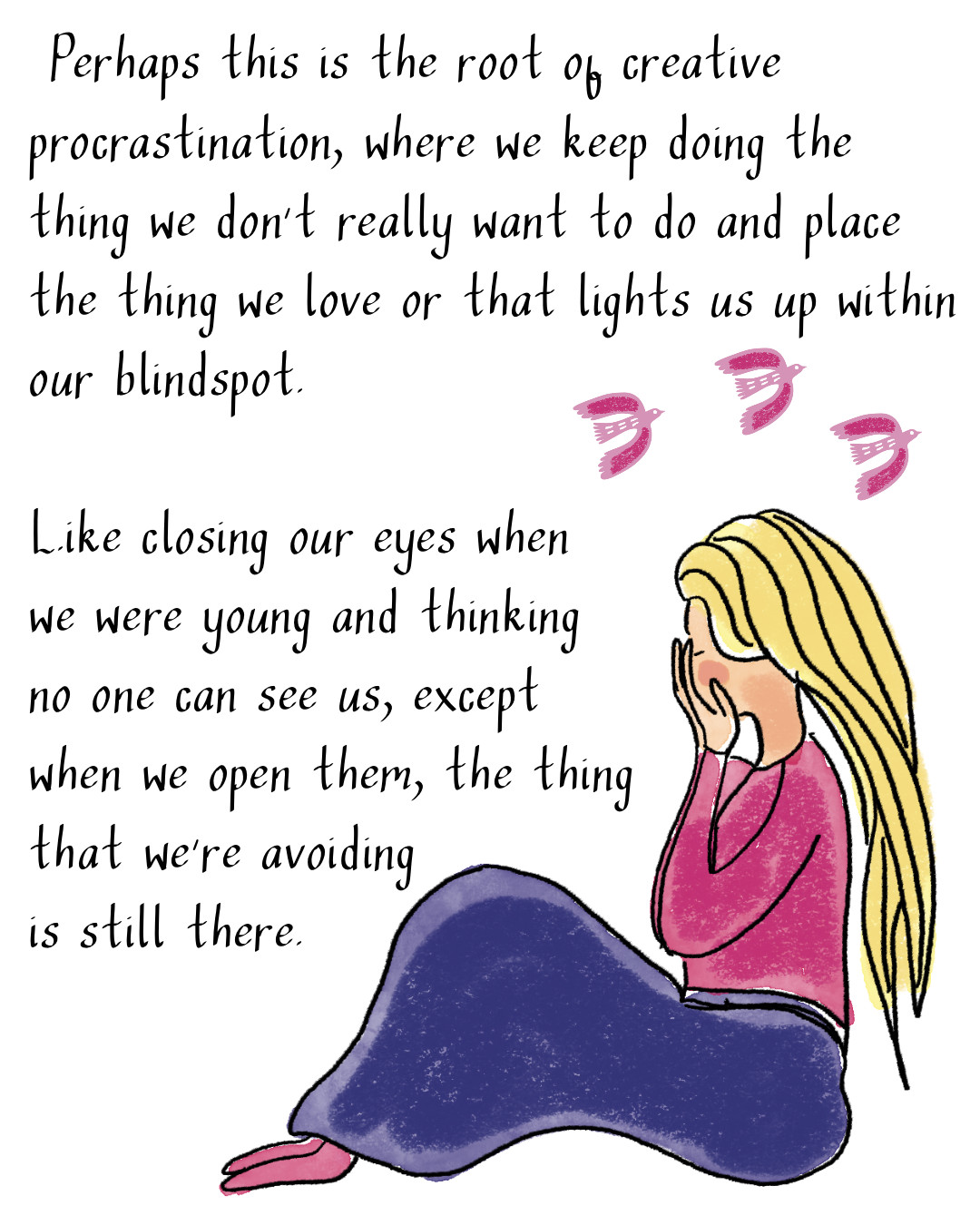
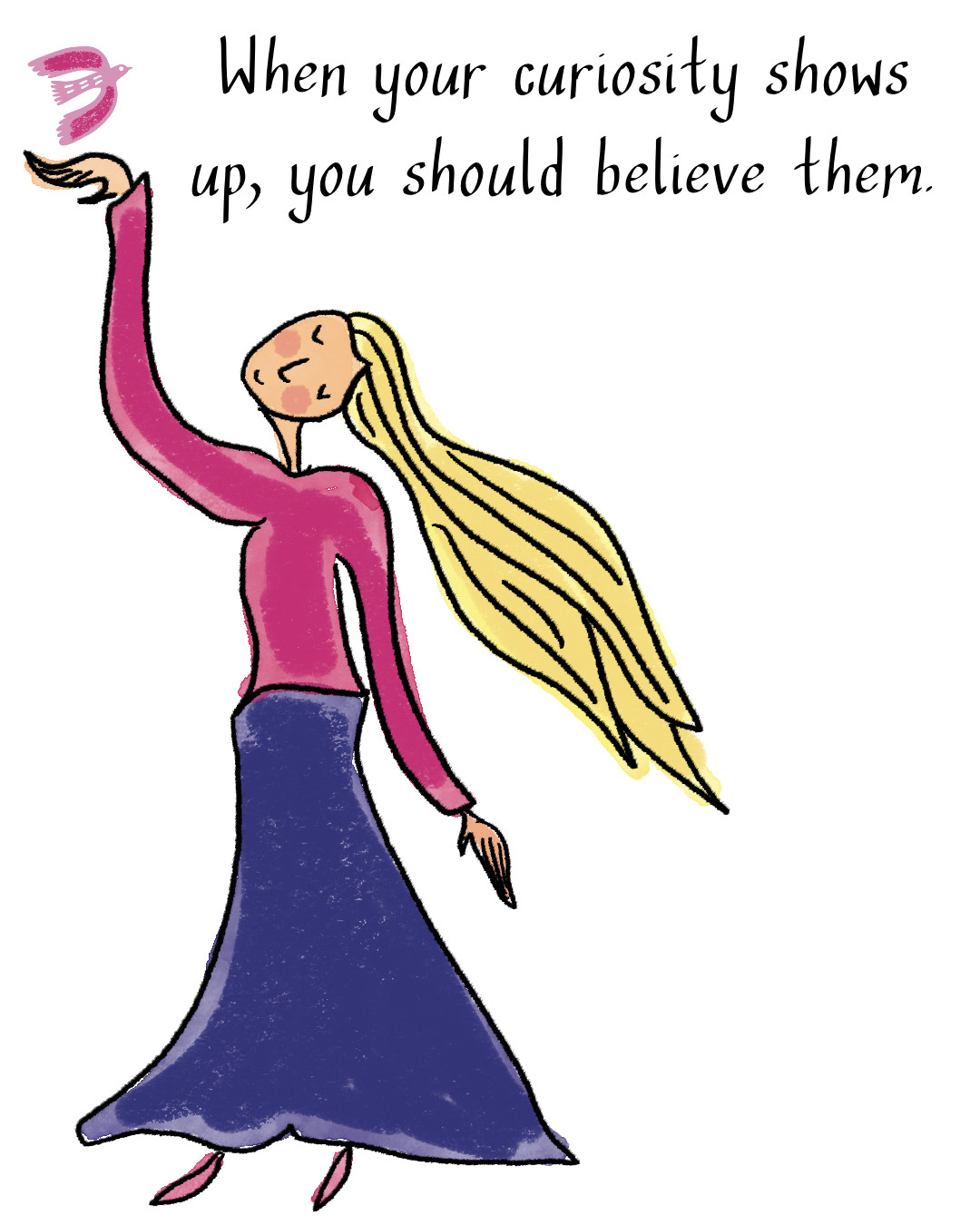
When Curiosity Shows Up, You Should Believe Them: Is this life enhancing or life reducing?

xx Jane

If you fancy exploring further with me, you might love Creating Wild. We’ve been exploring the emotional side of creating, and what it means to grow the edges of your skin to contain all the things you love.

You can learn more about it here.

Practices For Expanding Imagination: Practical experiments for stretching your creative limits

Last week, I wrote an essay about imagination. A lot of my work in the day to day looks at how our nervous system expresses in movement (you can learn more about the creative impact of that here) and I had questions:

How might understanding the relationship between the body, the nervous system and creative expression help us get unstuck?

What can we do to stretch our creative limits?

What does it practically look like to get ourselves to a place where new ideas, new inspiration is free to find us?

The mechanics of last week’s exploration was wordy and involved. This week, I wanted to strip it back to its bones.

Theory aside, what happens when the rubber meets the road? What can we do when we’re at our desk or the easel or *the wherever* to encourage our own creative flow and access to imagination?

Let’s tootle around with a few different ideas, shall we?

Disrupt authorship. Let your materials take over.

Being willing to explore the outer edges of your own imaginative universe requires a readiness to stay in the unknown for as long as you’re able to handle it.

It’s a relinquishing of control, a ‘let’s see what happens’ space, where we surrender to the unfinished, the awkward, and the unsure, or simply the truth of our creative experience as it expresses through us in that moment.

Disrupting authorship- letting go of the idea that you have to be the one to lead the show- is a great way of butting up against your own control patterns and actively stepping into curiosity.

If you’re finding yourself thinking, erm, well, it’s just me, myself and I doing this whole making and creating business, I’m not talking about letting someone else come in and take over the whole story.

It’s more an invitation to actively work with your materials or your subject matter in a way that that is non-conforming, intentionally experimental, and where you allow yourself to be to lead to places you never would usually have ventured.

Some examples include…

Adding water to your ink, smudging the pen or pencil marks you’ve made, draw on wet instead of dry paper.

Layering your materials (pastel upon pencil upon paint! Go wild!) and then drawing lines in them with found objects. Grab whatever you have and can, especially if it seems completely non-obvious or nonsensical. Especially then.

Draw without looking at the page. Let your hand follow sensation rather than image.

If you’re writing, pick a line with a particular cadence and rhythm and let it set the pace of the words that follow.

Pick a phrase and repeat it.

Allow the sounds of the room around you to shape your sentences. I don’t know what that looks like either. Try it.

Be willing to engage with your work and materials is a way that is intentionally disruptive to your usual modus operandi and see where it leads you.

Interrupt your work mid-stream

If you find you’re stuck or things are getting a little formulaic, break things up mid-stride. Interruption prevents pattern completion and forces the brain to re-map rather than repeat.

Stop drawing mid-line and continue on from a completely different angle, or even change your tools.

Rotate the page halfway through a drawing.

Leave a piece intentionally unfinished and begin again some hours later or the next day.

Stop a paragraph mid-sentence and start the next line somewhere unexpected.

Write in curves or shapes instead of straight lines. What does this do for the story, for the process of your thoughts?

Start your essay in the middle, or in mid-sentence conversation.

Begin and end somewhere unexpected.


Work at the edges of perception

I mean this quite literally.

What happens if you work in a room with low light or your eyes half closed?

This is not about trying to force clarity, or straining to see in a room where you feel half blind, but practicing ‘seeing’ in a different way.

What other senses wake up when your visual field is dimmed? What more do you become aware of?

How does changing the light affect your making? How does it change your access to language, to words?

Can you write whilst paying attention to bodily sensation rather than content?

How could softening the focus on your world interrupt your usual pattern of creating and take you somewhere you may not have been before?


Change scale

Changing scale shifts expected patterns and invites us to consider the same work a whole new way.

Zoom obsessively in on one detail.

Use exaggerated gestures (let you whole body be in on the game!), then switch to micro-marks.

Write one sentence ten different ways and ten different sizes.

Compress a long idea into six words.

Expand a single word into a full page.


Delay meaning as long as possible

I know, counterintuitive right? Surely we need to know where things are going and what things mean?!

Attaching meaning to an experience pulls you out of divergent thinking (the type we’re interested in within the imaginative phase) and into convergent thinking, which is not what we want in this particular movement.

As the people on the fancy podcasts say, understanding “closes the loop” on our thoughts, and marks the end of exploration.

Accessing imagination means staying in that open field space for as long as possible. If we can hold our nerve beyond the usual amount of time, we move beyond the obvious connections and understandings and into the Land of Never Before, the place where new and fresh ideas are free to find us.

Some ways to play with this on purpose include…

Working without naming what you’re making.

Banning interpretation or explanation of what you’re doing until you finished exploring and playing.

Letting something remain incoherent on purpose, and see what you take from it the next day.


Let discomfort be informational not directive

Discomfort doesn’t always mean that something’s wrong. It’s more often than not a signal we’re at the edges of our current artistic zone and about to move into something different. Treating discomfort as information rather than instruction helps keeps curiosity online.

Lately, I’ve been switching formats as a way to keep in the flow of what I’m doing without leaving the building (literally and metaphorically).

If I’m writing and get stuck or I’m not sure where an idea is heading, I’ll stay with the experience but switch to drawing or doodling. I keep my hand moving in a different way, let my thoughts move to a different space until I’m ready to return to the original plan.

Like so. I always have a doodle page and a writing page and I switch between both.

The same is true for drawing, but in the reverse. If I’m unsure where to go, I’ll sit and write for a while.

Staying on task but mixing up the mediums is really helpful for letting the ideas and understandings roll around the whitewash of your brain so you can stay available to what wants to come next without pushing or forcing things too hard.

I’d love to hear your thoughts.

What do you do to help your creative flow? Any fabulous tips or tools to share?

Happy creating!

xx Jane

A thing you might be interested in ✏️

I have a rather fabulous membership called Creating Wild and I say it’s fabulous people of the people in it- they really are fabulous.

We have a workshop every couple of week’s and the one coming up this weekend is called Creative Windows: Building the capacity to stay.

Here’s the blurb for you:

Why does creating feel possible one moment and unbearable the next? In this session, we’ll explore the emotional and nervous-system conditions that shape our creative availability.

We’ll look at how fear, guilt, perfectionism, and urgency show up in the body, and how to work with them rather than pushing past them. Through body-based practices and reframes, we focused on increasing creative capacity: learning how to stay present, soften resistance, and progress in our creative projects.

If you want to peruse the goodness or come join us, you can do that here. I’d love to have you join us 💛

A Body-Based Way Back To Imagination (For When The Well Is Running Dry) ✏️

I’m flat and foggy and devoid of inspiration. I hear my friend Tania’s voice inside my head. ‘What you need,’ she would tell me, ‘is a protocol. I have protocols that I follow when I’m tired. You need to turn your Expectation Dial way down. I would consider setting it to zero.’

Another voice enters the chat:

Problems of output are usually problems of input.

I think it was Austin Kleon who said that. I nod at the wisdom of it, then answer back, even though he cannot hear me.

I know what it is I need. Screens have been occupying too much of my time.

I need to move, I say. I need to get outside.

From a creative viewpoint, it’s easy to think of ‘input’ as artistic inspiration, a Pick’n’Mix version of Julia Cameron’s Artist’s Date.

When we feel flat or uninspired, we tend to diagnose ourselves as not reading enough, not learning enough, not exposing ourselves to the work, colours, and thoughts of others enough, which is lovely and necessary and right.

And while all of that may be true, the deeper lack is often not stimulation, but something much more simple and much more complicated at the same time; the capacity for presence. Our attention is regularly hijacked by urgency and opinion- by headlines, notifications, and the constant pull of what feels most pressing- but far less often encouraged to settle into the textures, rhythms, and details of the world we’re actually living in.

This has consequences for our creative life and our connection to our imagination (surprise!), but before we get to that, let’s talk about how it manifests in the very ordinary, very mundane aspects of our lives.

When our sensory systems are engaged in a broader way, we develop a more global context for our lived experience. This doesn’t mean that the urgent or important fade away, but we are better able to understand (we literally ‘have a better sense of’) events existing within a wider spectrum, allowing us to navigate our life and creative experience with more perspective.

In this way, we begin to orient not just to threat or news-worthy information (and if this is the only thing we’re paying attention to, it can narrow our experience to despair and gloom) but to the reality of where we are right now, which is infinitely more nuanced and varied. Light, sound, temperature, movement, distance, and texture give the nervous system a continuous stream of contextual cues that allows us, as I recently heard my friend Kate say, to bring our thoughts back to where our feet are.

These sensory cues- an active body feeling its way through the world- are what the brain needs in order to understand its place within the environment it’s in. They are what allow our unconscious processes to place us into a fight flight response should that be relevant and necessary, but equally importantly, sensory input is what allows the brain to take us out of a fight flight response when that state of being is no longer required.

Sensory input is the be all and end all of a body that is adaptive and not stuck, the necessary input for our brains to answer the question, are we safe? And respond in a way that is appropriate.

And here’s the catch: our sensory capacity is compromised when we find ourselves operating in fight-or-flight. The reason for this is functional. In survival situations, it doesn’t make sense for our feeling selves to be fully online. If you’re injured or under threat, feeling everything is a distraction that reduce your chances of doing what you need to do to survive.

Consequently, in these moments, the nervous system turns the volume down on sensory input- sensory nerves effectively go offline- and they come back online once safety is perceived again. It’s an elegant system when you’re living in conditions your nervous system is designed for.

The difficulty that many of us now face is that this animal body of ours is living in circumstances it was never built to navigate. Our needs are now met without need for movement or sensory integration- we no longer need to hunt for food, build shelter, or tend to each other the way we once did- and the resulting lack of novel movement and sensory information means that we are no longer stimulated out of survival states when it is necessary and appropriate.

We have, essentially, comforted and convenienced ourselves into unwellness. And as a result, we find that we’re stuck in survival reflex experiences, looping round and round.

This is where the vicious cycle begins. If the brain relies on sensory input to accurately place itself in the world, and that input is reduced for long periods of time, what happens then?

Chronically operating from fight flight, or your sympathetic nervous system, not only changes how we create but changes our experience of the world.

Instead of our reality being shaped by our relationship to the world around us, we become trapped inside our own story. When our feeling selves are dialled down, the most real thing that we have to go on becomes our internal narrative. That inner world starts to act as the primary medium of perception, rather than the wider, living environment we’re actually in.

From a creative perspective, this also results in imagination existing separately to the ecosystem it’s a part of. We forget that imagination is an emergent process at the cross roads of sensing, moving, emotion and memory. We begin to think of ourselves as the generator of ideas, the start and end of the creative process, a state of being that is pressured and exhausting.

When our sensory world is narrow and urgency-driven, the body hovers in a state of vigilance. Attention is then pulled toward what demands a response, and very little else gets through.

In that state, it’s common to feel flat, foggy, or uninspired, and the truth of it is, you are. But the reason is not because you have lost your creative edge, or your imagination has dried up. It’s because your nervous system is too busy managing pressure to take in richer information, and your sensory and movement needs aren’t being met.

Imagination doesn’t go away but we can get ourselves to a place where it doesn’t have the conditions that it needs to emerge.

When attention widens to include the ordinary, physical world beyond the urgent, our nervous system opens up to new sensory experiences. We exist, again, in relationship. Our body becomes conversational, both with itself and the wider systems that it is a part of.

From here, curiosity becomes possible. Imagination has room to return, existing within a physiology that is open and responsive.

In this place, creative work stops feeling like something we have to force, and begins to arise more naturally from being in the world and sensing, rather than thinking, our way through.

Curiosity As A Signal Of Safety

Curiosity sits right at the centre of the relationship between sensory–motor experience (our body in conversation with the world through sensing and movement), emotion, and imagination.

The experience of curiosity is a functional signal that these systems are working together, the good news being that the experience is bi-directional; while curiosity emerges, we experience more open awareness, and likewise, we can encourage this state of being by actively inviting curiosity.

When sensory information, movement, emotion, and memory are integrated, attention can orient toward novelty without immediately tipping into defence. Curiosity then becomes our internal communication system indicating that the nervous system has the capacity to explore and we are no longer operating from reactivity and reflex, or at the very least, are encouraging ourselves in that direction.

Curiosity opens the sensory–motor field by inviting us to move differently, notice more, and stay with our experience a little longer.

That expanded reality gives the imagination more to work with. As imagination widens what we perceive or sense is possible, curiosity is further supported.

Exploration then becomes self-reinforcing and self-supporting. Which is why I frequently reminding myself: when I’m out of ideas of feeling flat, the kind of input I’m likely to need is to get outside and move.

Brain Maps, Movement & Imagination

Our brains are constantly building maps of the world and of ourselves through repeated experiences of sensing, moving, and feeling. Our internal maps are how we relate ourselves to our environment, understand our place within it, and seek to navigate it as easefully as possible.

When our experiences are emotionally meaningful, these maps become more detailed, flexible, and interconnected (they can also become distorted depending on the type of emotional attention we pay them, but that’s a story for another day). Curiosity plays a crucial role here. It encourages variation in movement, sustained attention, and novel sensory input, all of which help refine and elaborate our maps.

When curiosity is offline, and our state of being is dominated by survival, our maps become outdated and distorted. Sensory information narrows, movement patterns reduce to reflex, and imaginative range contracts.

Supporting curiosity, then, isn’t just about feeling more creative. It’s about giving the brain the input it needs to keep our entire beings adaptive and online.

Why Movement & Sensing Matter When You Feel Flat

Novel movement and sensing are one of the most direct ways to interrupt this narrowing of our attentional field. They give the brain information about the place we currently find ourselves in and disrupt the brain’s tendency to predict and repeat what we already know.

When our movement becomes limited and habitual, our sensory system lacks stimulation and as a consequence, our imagination has very little new information to respond to. But when we introduce regular, novel movement — a way of moving that requires attention and cannot be done in an automated way- our entire system is prompted to return to the moment we find ourselves in.

Imagination then emerges as our perception widens.

Importantly, this novelty doesn’t have to be dramatic. Walking barefoot or on uneven terrain is one example. Bringing your attention to changing pressure in as much as your body relates to the world around you.

Take a sensory snapshot in your mind’s eye of the parts of your foot in relationship to the ground.

Presence is organising.

Being present to your bones, your skin, your connection to what it is you are resting on, literally changes how your body arranges itself.

Next week, we’re going to continue the conversation by talking more directly about creative ways to bring your imagination online with consideration to your movement and sensing needs but in the meantime, if you have thoughts or questions, I’d love to hear them!

Leave ‘em below and I’ll report back.

Happy moving!

xx Jane

Who Are We Without Our Dreaming Parts?

Things to do next ✨

  1. Devote some time to intentional dreaming, as a matter of necessity.
  2. If you feel so inclined, I’d love to hear your thoughts in the comments and please feel free to share. It makes such a difference.
  3. If you fancy giving more time to your creative life and want some help to do so, considering playing with me inside Creating Wild. It’s all sorts of magic in there ✨

Much love to you,

xx Jane

The Living Line: Line As Life Moving Through You